
If you cut grass for a living, or even just cut a couple of acres every week, you already know the drill. The cut quality fades, the tips of the St. Augustine start looking ragged, and the mower starts vibrating just enough to feel it in the seat. Most folks bring the deck in and ask us to sharpen the blades. A few ask why the new blades they just put on still shake the whole machine. That second question is the one that got me to buy the SporGain blade sharpener and balancer for my own 54 inch zero turn.
I am Gene Holcomb, and I have spent over 20 years on the bench at a small-town outdoor power equipment dealership in East Texas. I see dull blades and out-of-balance blades every single week. So when I tell you I have been running the SporGain sharpener and balancer at home for a full season, I mean I have been using it the way I would tell a customer to use it, then checking the results the way I check work that comes through the shop.
The Quick Verdict
The SporGain sharpener and balancer does what it claims, holds up to regular use, and pays for itself in the first season if you sharpen your own blades. It is not magic, and it will not fix a blade that is already bent or badly nicked, but for normal maintenance it is the tool I reach for now.
Amazon Check Today's Price →Sharpen and balance both blades in about 20 minutes
The SporGain sharpener and balancer is the setup I keep on my own workbench. It handles the 15 to 45 degree angles you actually see on zero turn blades, and the balancer catches the low side so you know which blade edge to take more off.
Amazon Check Today's Price on Amazon →How I've Used It
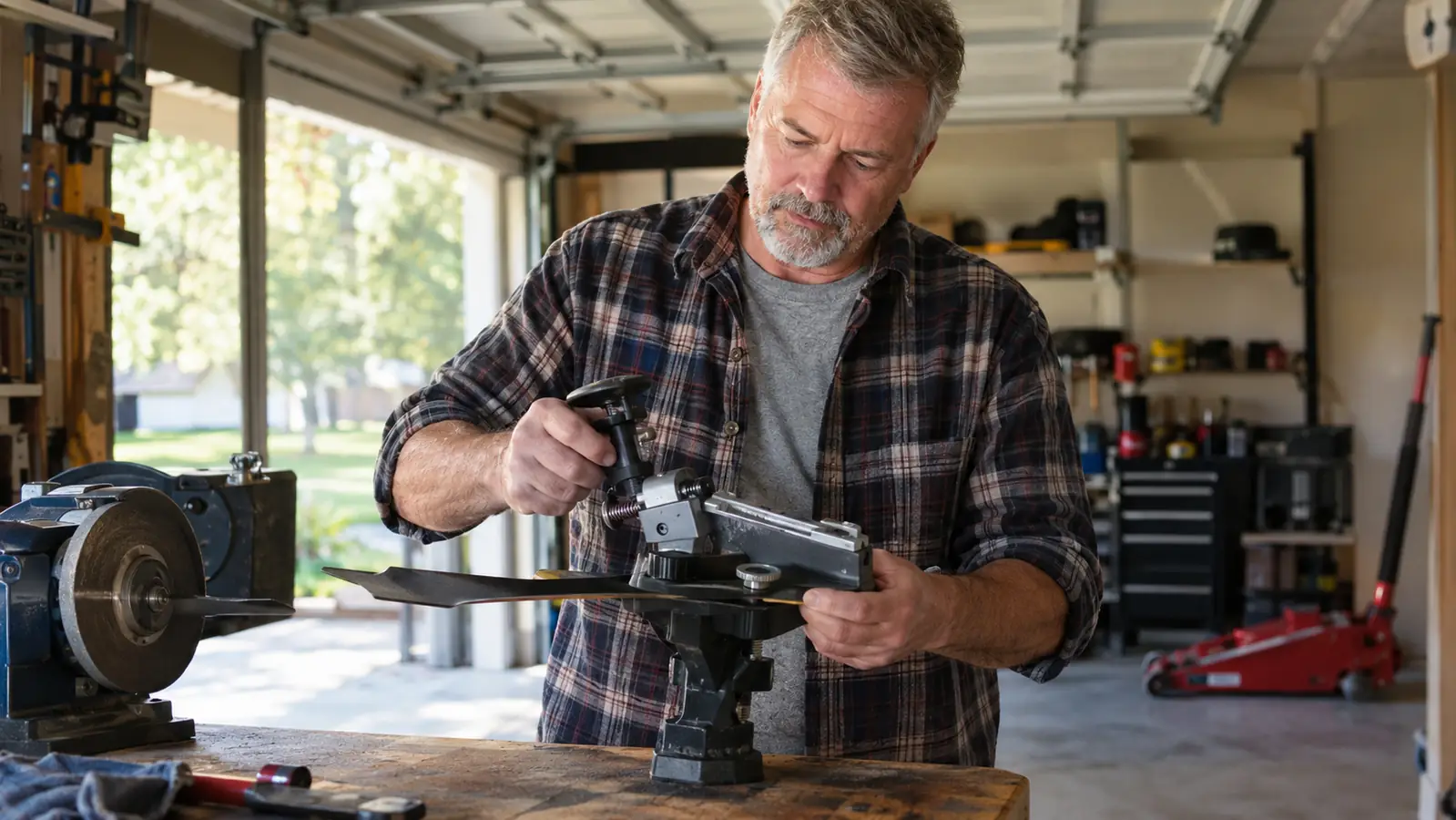
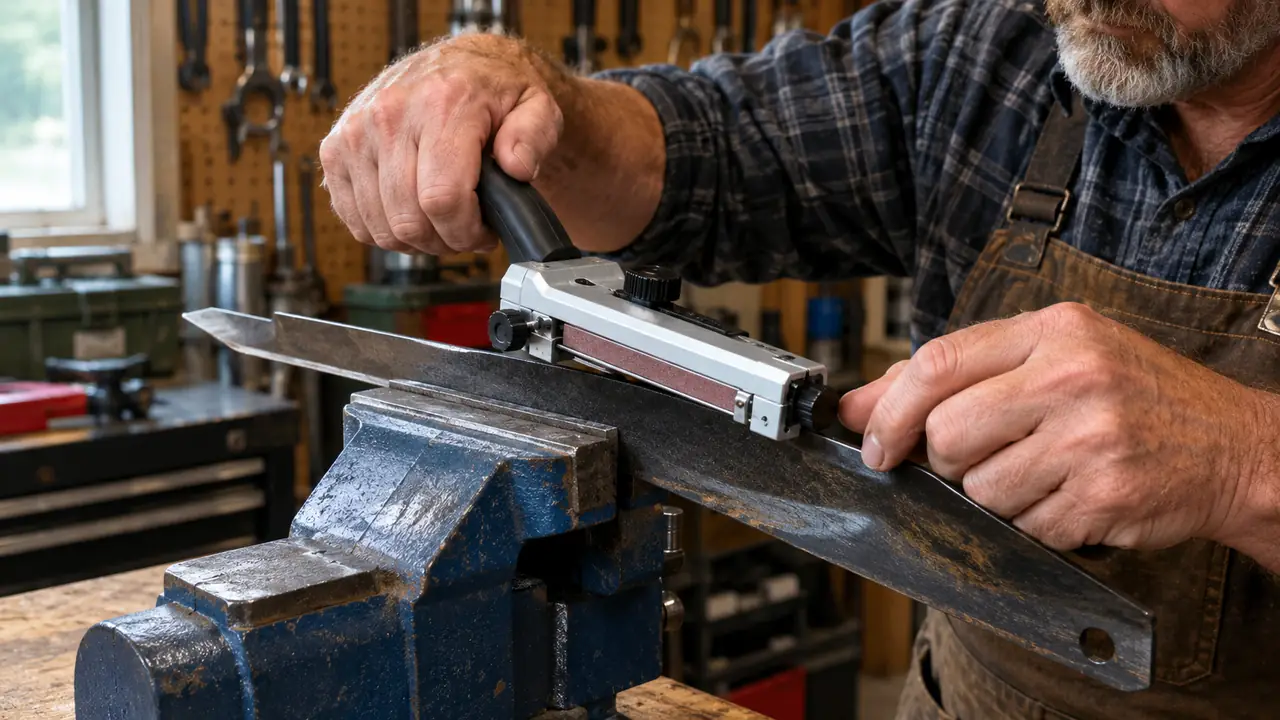
My routine is simple. Every four to six weeks during the growing season, I pull the deck off my 54 inch zero turn, take the two blades off, and clamp one in the bench vise. The SporGain sharpener rides on the blade edge and you run it back and forth along the existing bevel. It has an adjustable angle stop, so you set it once and it keeps the same angle for the whole pass. I run it until the edge is consistent, then flip the blade and do the other side.
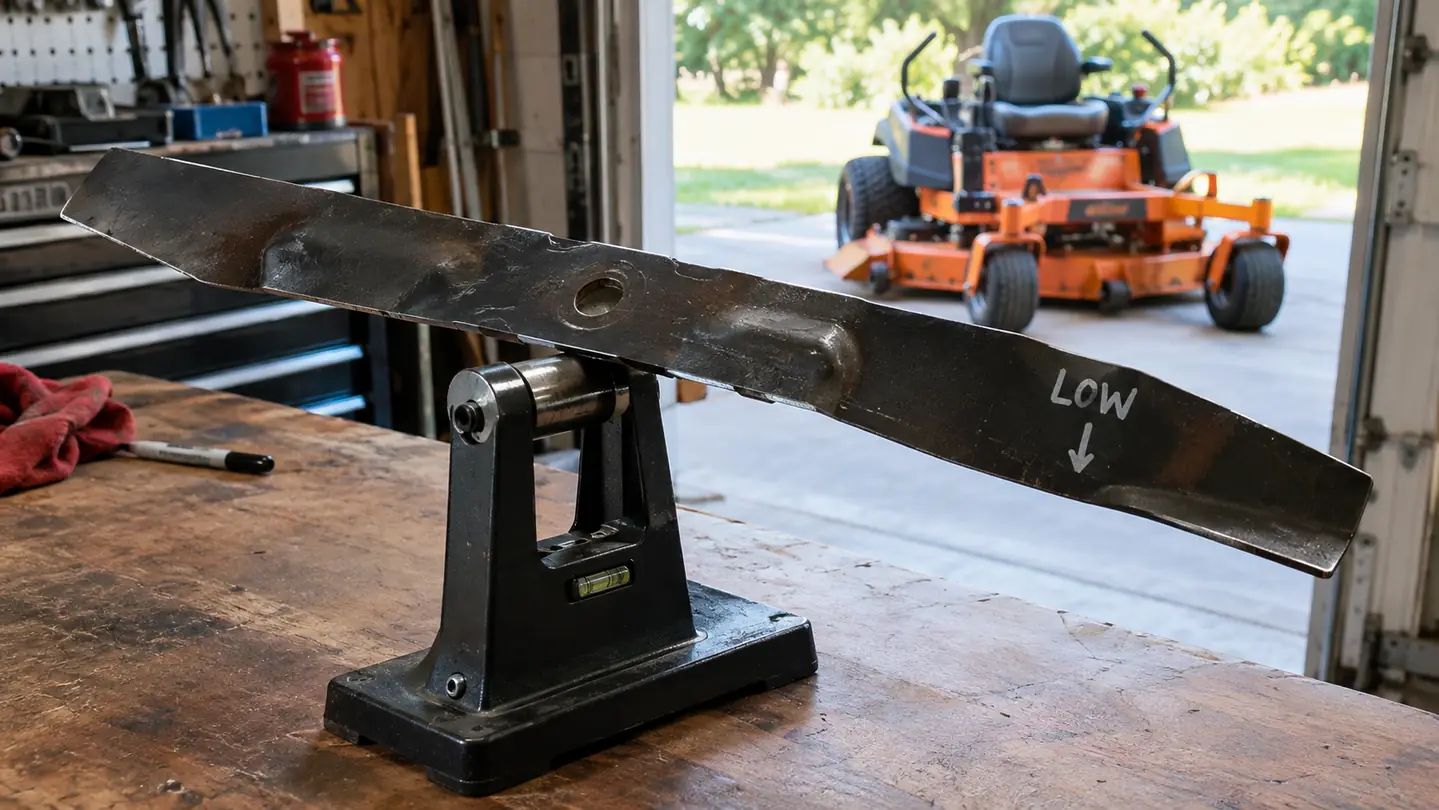
Then comes the part most people skip. I put the blade on the balancer, which is a cone that sits on a flat base. The blade rocks to the heavy side, and you mark the low side with a marker, take a little more off that edge, and check again. On my blades, it usually takes two or three passes before the blade sits level. The whole job, both blades, sharpening and balancing, runs about 20 minutes once the deck is off.
I have used it on my own blades, on blades I brought home from the shop to test, and on a spare set I keep ready to go. The sharpener handles the standard blades on residential zero turns without any trouble. I have not tried it on a commercial deck with a 20 inch blade, because I do not own one, but the angle range covers what most homeowners and light commercial guys are running.
What the SporGain Sharpener and Balancer Actually Does
The SporGain is two tools in one. The sharpener is a guide that holds a sharpening stone or file at a fixed angle against the blade edge. You set the angle anywhere from 15 to 45 degrees, which covers the factory bevels on most mower blades. The balancer is a separate piece: a cone with a flat base that lets the blade rock until the heavy side drops.
Here is how I actually use it on blade day. With the mower up on the lift, I mark each blade with a paint pen so I know which spindle and which side faced up, then pull all three. I clamp the first blade in the bench vise, set the SporGain guide to match the existing bevel, which on my blades was right around 30 degrees, and work the edge from the center out to the tip until I have a clean, even bevel with no shiny rolled lip. Then the blade goes straight onto the balancer cone. If one end drops, I take a little more off the back of the heavy end, not the cutting edge, and check it again. Three blades take me about twenty five minutes, start to finish.
The reason the balancer matters is that a blade does not have to be visibly bent to be out of balance. You can remove the same amount of steel from both ends, and the blade can still be heavy on one side because the factory grind was not perfect, or because one end has picked up more wear. An out-of-balance blade at 3,000 rpm shakes the spindle, the deck, and eventually the bearings. I have replaced spindles on decks where the owner swore the blades were fine because they were sharp. They were sharp. They were also throwing the whole deck into a vibration that ate the bearings.
On a zero turn the problem is multiplied, because a 54 inch deck turns three blades at high speed off one belt. One heavy blade shakes its own spindle, and that vibration travels through the deck shell and into the other two spindles and the belt idlers. At the shop we see it as a spindle bearing that starts to growl in the middle of the season, or a belt that keeps jumping off. More often than not, when we pull the blades on that mower, one of them is badly out of balance from a home sharpening job that took more off one end. The fix costs nothing if you catch it on the bench, which is exactly what the SporGain balancer is for.
The SporGain handles both jobs in one setup, which is the main reason I bought it. I had a bench grinder already, and I still use it for badly nicked blades. But the grinder takes off steel fast, and it is easy to overheat the edge or change the angle without meaning to. The SporGain is slower, but it follows the existing bevel and it does not let you wander off the angle. For a blade that is just dull, that is the right tool.
How It Holds Up Over a Season of Use
I have had the SporGain on my workbench since early spring, and I have sharpened my blades five or six times with it. The angle stop still clicks into place the same way it did on day one. The cone on the balancer has a few scuffs from setting blades on it, but no dents and no wobble. The base sits flat on the bench. Nothing has loosened up, and nothing has worn out.
The one thing I watch is the sharpening stone. The SporGain comes with a stone, and it does wear. That is normal, and it is not a defect. I have worn one stone down and replaced it with a standard sharpening stone that fits the holder. If you sharpen blades every couple of weeks, plan on replacing the stone every season or two. That is a few dollars, not a problem.
The balancer is the part that has surprised me the most. I have used the old trick of balancing a blade on a nail or a screwdriver, and it works, but it is fiddly. The SporGain cone is faster and more repeatable. I can set a blade on it, see the low side, mark it, and take steel off with confidence. When I put a balanced blade back on the mower, the deck runs smooth. You can feel the difference in the seat, and you can hear it in the deck.
The first time I balanced a blade with the SporGain and put it back on the mower, the deck ran smooth enough that I checked the spindle bolts twice. That is the difference balance makes.
What It Costs You If You Skip the Balancer
Here is the part I explain to customers at the counter. A dull blade tears the grass instead of cutting it. The tips turn brown within a day, and the lawn looks bad even when you just mowed it. That is the cheap problem. The expensive problem is the vibration.
A blade that is out of balance by even a small amount will shake the spindle. The spindle bearings take the punishment, and they do not last forever. I have seen spindles fail at around 300 hours on decks where the owner never balanced a blade. A spindle replacement runs more than the cost of this tool, and that is before you count the labor. If you are paying a shop to do it, you are out a good chunk of money and a day without your mower.
I keep a rough rule for customers. A blade that is only dull costs you cut quality, and you see it as brown, frayed grass tips a couple of days after you mow. A blade that is dull and out of balance costs you parts. A spindle assembly, a set of bearings or a deck belt replaced at a dealership is a much bigger bill than a sharpening tool, and the labor usually costs more than the part. Sharpening and balancing your own blades every four to six weeks in the growing season is the cheapest insurance you can buy for a zero turn deck, and having the sharpener and the balancer on one tool makes it more likely you will actually do both.
The SporGain does not make you a better mechanic. It makes you a more consistent one. It takes the guesswork out of the two things that matter most on a mower blade: the angle and the balance. That is worth something when you are standing in the garage at 7 AM trying to get the deck back on before the grass gets too tall.
Who This Is For
The SporGain is for anyone who sharpens their own blades and wants the job done right. If you already pull your deck off a few times a season, this tool will make the sharpening faster and the balancing actually possible. It is also for the person who is tired of buying new blades every few months because the old ones are dull and they do not have a good way to sharpen them. A sharpened and balanced blade will outlast a neglected one, and the cut quality stays where it should be.
It also fits the owner who has been paying the shop to sharpen blades and wants to start doing it at home. There is no trick to it once you have a guide that holds the angle for you, and the SporGain takes away the part people get wrong freehand, which is wandering off the factory bevel and leaving a blade that is sharp in the middle and rounded at the tip. Pair it with a way to get under the deck safely, a mower lift or a solid set of ramps, plus heavy gloves and eye protection, and you have the whole blade job covered on your own schedule. On my own 54 inch zero turn, that has meant a cleaner cut all season long.
It is also a good fit for the small shop or the guy with a couple of mowers. If you are sharpening blades for yourself and a neighbor or two, the SporGain will earn its spot on the shelf quickly. The angle range covers the blades on most residential zero turns and tractors, and the balancer works on any blade that fits the cone.
Who Should Skip It
If you only mow a quarter acre with a push mower, you do not need this. A hand file and a few minutes on the bench will do the job, and the balancer is overkill for a blade that small. If you have a commercial operation and you are sharpening blades every day, you probably want a dedicated grinder and a digital balancer. The SporGain is a home shop tool, and it is honest about that.
Skip it also if your blades are already bent or badly nicked. The SporGain will sharpen a straight blade, but it will not straighten a bent one, and it will take a long time to grind out a deep nick. For those blades, you are better off replacing them. The SporGain is a maintenance tool, not a repair tool, and that is exactly what it should be.
What I Liked
- Sets a consistent angle from 15 to 45 degrees, so you do not have to hold the file by feel
- Balancer shows the low side clearly, which takes the guesswork out of balancing
- Sturdy build that has held up to a full season of regular use
- Covers the blades on most residential zero turns and tractors
- Replacement stones are cheap and easy to find
Where It Falls Short
- Slower than a bench grinder on badly nicked blades
- The stone wears and needs replacing every season or two
- Not built for commercial daily-use volume
- You still have to pull the deck and blades yourself
Put a sharp, balanced set of blades on your mower this weekend
The SporGain sharpener and balancer is the tool I keep on my own bench. It handles the angles on zero turn blades, catches the low side so you know which edge to work, and holds up to regular use.
Amazon Check Today's Price on Amazon →