
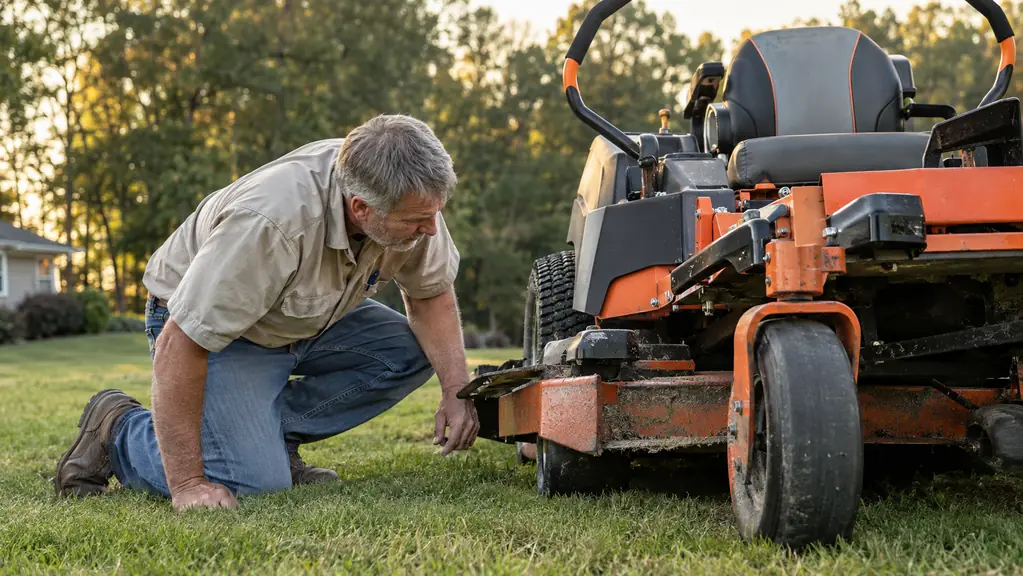
I put a set of UDC Parts 54 inch high lift blades on my own zero turn last spring, and I ran them all season on St. Augustine and Bermuda. That is about 40 mows on two and a half acres, some of it thick enough to stall a lesser deck. I am a service tech, so I also know what a blade is supposed to look like after a season, and I checked these the same way I check a customer's set when it comes in for sharpening.
The short version: these blades cut well, they throw clippings a long way, and they are holding up better than I expected for the price. They are not the last word in blade steel, and they need a sharpening pass more often than a premium set. But for a residential zero turn on a normal mowing schedule, they earn their spot on the shelf.
The Quick Verdict
A solid high lift blade for residential zero turns. Great bagging and side discharge performance, good value, and it held an edge through a full season. Just plan on a mid-season sharpening.
Amazon Check Today's Price →The high lift blade I ran all season on my own 54 inch deck
UDC Parts makes a 54 inch high lift blade that fits Husqvarna and other residential zero turns with a five point star center hole. I ran a set for a full season and they threw clippings hard and held up well. Check today's price on Amazon and see if they fit your deck.
Amazon Check Today's Price on Amazon →How I've Used It
My mower at home is a residential zero turn with a 54 inch deck, and I keep about two and a half acres of St. Augustine and Bermuda in shape with it. That means a full cut every five to seven days through the growing season, plus a few weeks where the grass gets away from me and I am cutting tall, wet, thick stuff that would bog down a lesser deck.
Before these went on, I was running a set of no-name blades a customer had left behind at the shop when he upgraded his deck. They were fine for about six weeks and then the edges started folding over every time I clipped a fire ant mound. By June I was getting that frayed, brown-tipped look on the St. Augustine two days after a cut, which is the grass telling you the blade tore it instead of slicing it. That is what pushed me to try the UDC Parts set. I wanted something that would hold an edge through a Texas summer without me paying dealer price for the factory part, and I wanted to see for myself whether an aftermarket high lift blade could carry a full season on two and a half acres.
I installed the UDC Parts blades in early April, right after the last frost date we usually see here in East Texas. I torqued the center bolts to spec, checked the spindle nuts, and made sure the blades were indexed correctly so they would not hit each other. The five point star center hole lined up clean on all three spindles, which is not something I can say for every aftermarket blade that comes across my bench.
Over the season I ran the mower at full throttle, which is how you are supposed to run a zero turn, and I kept the deck height at about three and a half inches for most of the summer. I bagged some of the early spring growth, and I side discharged the rest. I also mowed through a few patches of wet grass after a storm, which is the fastest way to find out whether a blade is actually high lift or just painted to look like one.
What High Lift Blades Actually Do
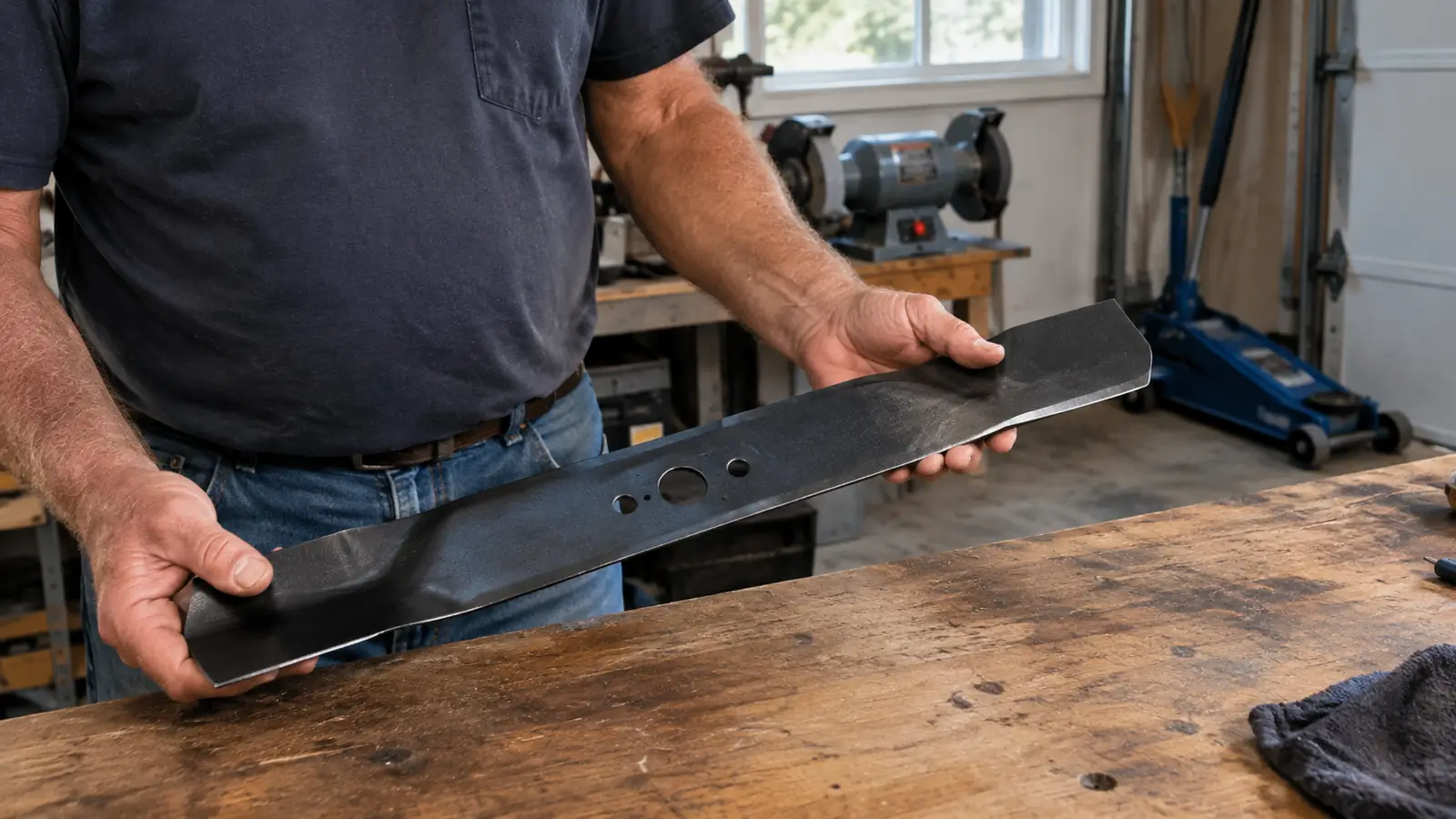
A high lift blade has a curved wing near the end that pulls air up through the deck and out the discharge chute. That airflow is what stands the grass up before the cutting edge hits it, and it is what throws the clippings out with enough force to spread them evenly or pack them into a bag. A standard blade just cuts. A high lift blade cuts and moves.
On my St. Augustine, the difference was obvious from the first mow. The UDC Parts blades left a clean, even cut with no ragged tips, and the clippings came out of the chute in a steady stream instead of dribbling out in clumps. When I bagged, the bags filled evenly and I did not have to stop and clear a plugged chute, even in the thick spring growth.
The Bermuda side of the property told a slightly different story. Bermuda is finer and lies down more, especially in the stretch along the fence where it gets afternoon shade. With my old blades I would see a row of uncut blades standing back up behind the mower on that stretch. With the UDC Parts blades pulling more air, those stragglers got lifted into the blade and cut on the first pass. I timed it one Saturday in May: the whole back section took me about eleven minutes less because I was not going back over the shady strip a second time. That is not a lab number, but on a hot afternoon eleven minutes on a mower seat is worth something.
The tradeoff is that high lift blades cost you some engine power. They move more air, so they take more horsepower to spin. On a residential zero turn with a 54 inch deck, you will notice it in thick grass. The mower slows down a little, and if you try to cut too fast in heavy St. Augustine, you will leave a strip. The fix is to slow down, not to switch back to standard blades.
How the Blades Held Up Over a Full Season
I pulled the UDC Parts blades off in late October, after the last mow of the season. I checked them the way I check a customer's set: look at the cutting edge, look at the wing, look at the center hole, and check for cracks or bent sections. What I found was a set of blades that had done a season of honest work and still had life left in them.
The cutting edges had rolled over in a few spots, which is normal after 40 mows on sandy East Texas soil. The wings were still straight, and the center holes had not wallowed out, which is the failure I see most often on cheap aftermarket blades. I sharpened them on the bench grinder, balanced them on a blade balancer, and they are ready to go back on next spring.
I also put the blades on the balancer at the shop the day they came off. Two of the three were still dead level. The third dipped slightly toward one end, which I traced to a nick about an inch in from the tip where I had caught a buried sprinkler head in August. A few passes on the grinder brought it back into balance. That matters, because an out of balance blade does more than leave a bad cut. It shakes the spindle bearing every revolution, and over a season that is how a spindle starts to whine. Catching it at the end of the season meant the spindles on my mower went into winter in good shape.
One honest note: these blades need a mid-season sharpening pass. I sharpened mine in July, right around the 20 mow mark, and the cut quality improved noticeably. A premium set of blades might hold an edge a little longer, but you are paying two to three times as much for that extra edge life. For a residential mowing schedule, the UDC Parts blades are the better value.
After 40 mows on St. Augustine and Bermuda, the wings were still straight, the center holes had not wallowed out, and the blades still had life left in them.
Fitting and Installation Notes
The UDC Parts 54 inch high lift blades are made to fit Husqvarna and other residential zero turns that use a five point star center hole. If you are not sure whether they fit your deck, the easiest check is to pull one of your current blades and compare the center hole and the overall length. The fit is the part that matters, and it is the part you cannot guess at.
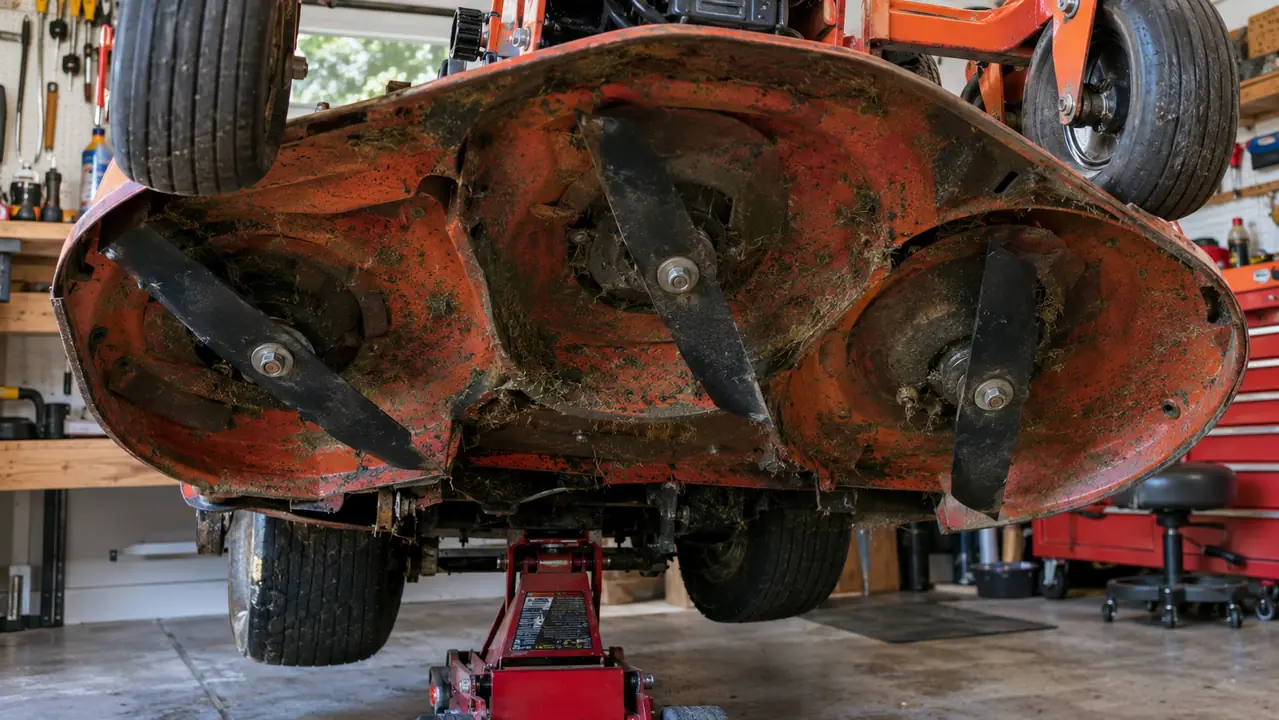
Installation is straightforward if you have a jack or a set of ramps. I raised the deck with a floor jack, blocked it safely, and used a socket and a breaker bar to break the center bolts loose. The bolts on my mower are reverse threaded on one side, so I checked the manual before I started. That is the kind of detail that saves you a stripped bolt and a bad afternoon.
A few tips from the bench that apply to any blade swap. Mark the old blades with a paint pen before you pull them so you know which way the wing faced, then check that the new UDC Parts blades are going on with the wing pointing up toward the deck. Put a block of wood between the blade and the deck shell so the blade cannot spin while you break the bolt loose. Clean the spindle face and the underside of the pulley area while you are in there, because packed grass holds moisture against the steel. And look at the center bolt and the star washer. If the washer is cupped or the bolt threads are chewed, replace them now, because a blade that lets go at full throttle is the one job I never want to see come across the counter.
Torque the center bolts to the spec in your manual, not to what feels tight. An under-torqued blade can shift and wallow out the center hole. An over-torqued bolt can strip the spindle threads. I have seen both on customer mowers, and both are preventable with a torque wrench and a manual.
Who This Is For
These blades are for anyone with a residential zero turn who wants a better cut and better clipping management without spending premium blade money. If you bag, high lift blades are almost a requirement, because they are what move the clippings up into the bag instead of leaving them in a pile under the deck. If you side discharge, they spread the clippings more evenly and keep the deck from clogging in thick grass.
They also make sense for the person who bags clippings in the spring to keep thatch down and then switches to side discharge for the summer. I did exactly that on my own lawn. The UDC Parts blades filled the bagger evenly in April and May without clogging the chute, and once I pulled the bagger off in June they spread clippings in a wide, even fan instead of dumping them in a windrow. One set of blades handled both jobs without me changing anything but the attachment. If you are the kind of owner who checks the oil before every mow and does not mind pulling the blades twice a season to sharpen them, these will treat you well.
They are also a good choice if you are tired of replacing cheap blades every few mows. The UDC Parts blades are not the cheapest set on Amazon, but they are built well enough to last a season, and the price is fair for what you get. I would put them in the same class as the mid-range aftermarket blades I stock at the shop, and I have recommended them to customers who want a dependable set without the premium price tag.
Who Should Skip It
If you mow a lawn that is mostly thin, sandy soil and you never bag, you do not need high lift blades at all. A standard blade will cut it fine, and it will cost you less and use less engine power. High lift blades are a tool for thick grass and for bagging, not a universal upgrade.
If you are running a commercial mowing operation, I would also point you elsewhere. These blades are built for residential duty, and a commercial crew will wear them out fast. You want a blade with a thicker cross section and a harder edge, and you are going to pay for it. The UDC Parts blades are a residential part, and that is not a criticism, it is just the truth about what they are.
What I Liked
- Strong high lift action for bagging and side discharge
- Clean, even cut on St. Augustine and Bermuda
- Held up well through a full season of residential mowing
- Five point star center hole fit cleanly on all three spindles
- Fair price for the build quality
Where It Falls Short
- Needs a mid-season sharpening pass
- High lift blades cost some engine power in thick grass
- Not built for commercial duty
Ready to see how these blades cut on your deck?
A full season on my own 54 inch zero turn says the UDC Parts high lift blades are a solid buy for residential mowing. Check today's price on Amazon and compare the center hole to your current blades before you order.
Amazon Check Today's Price on Amazon →