
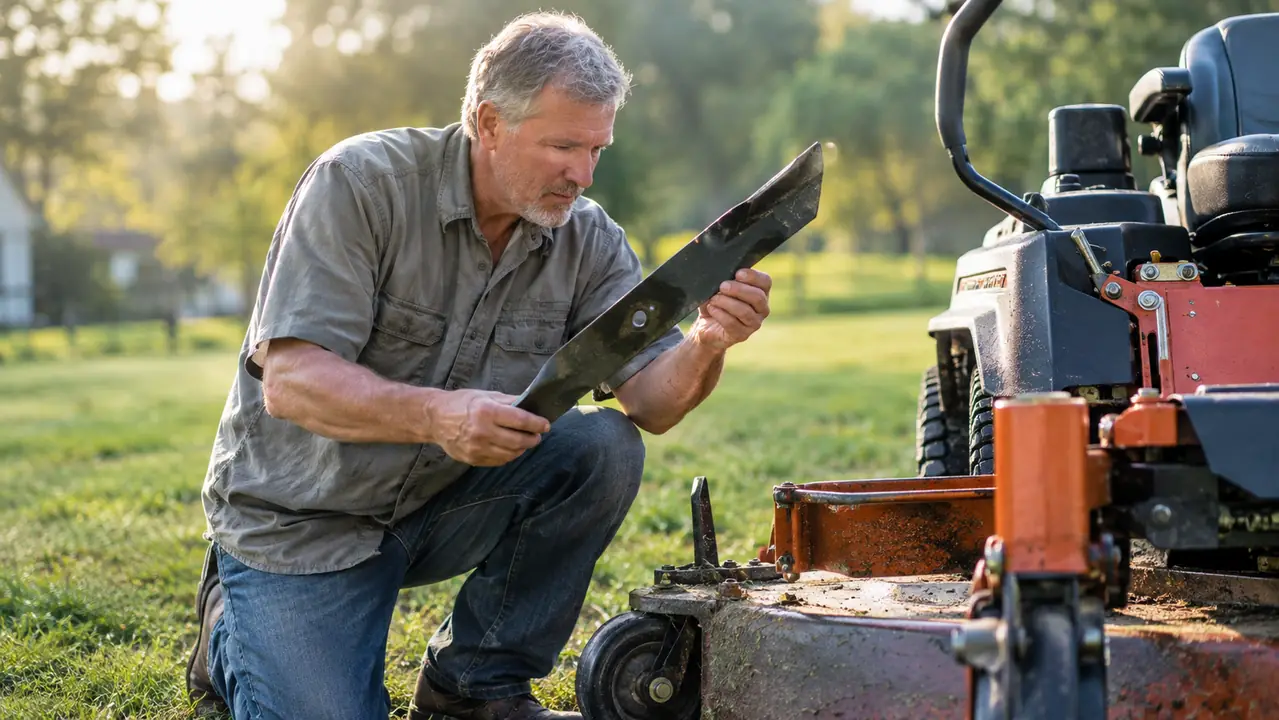
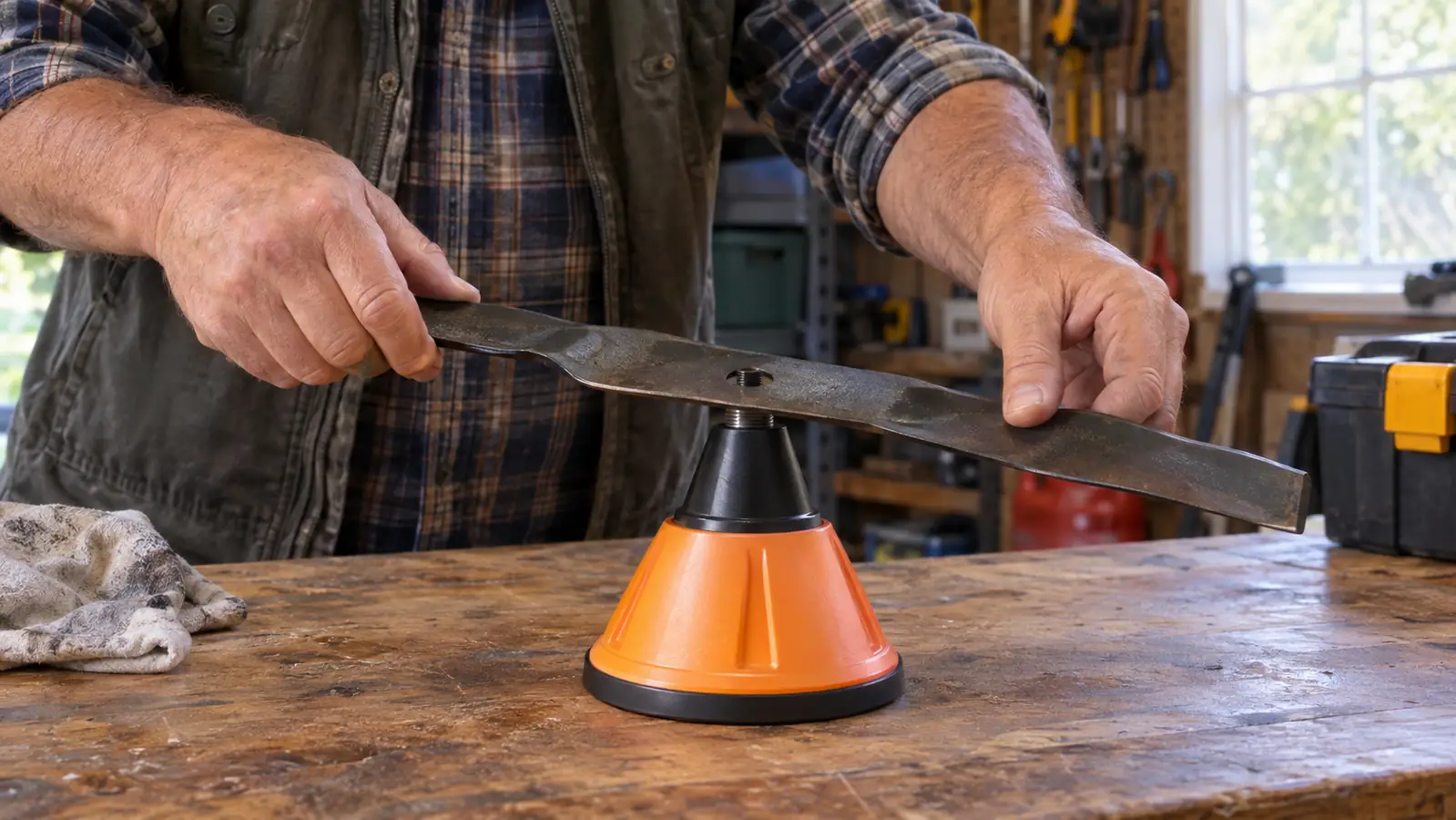
I chased a vibration for two summers before I figured out it was my own doing. The mower ran fine at low throttle, but open it up and the whole deck hummed, the steering wheel buzzed, and the grass came off looking like it had been chewed instead of cut. I checked spindles, I checked belts, I checked the engine mounts. I replaced a pulley that did not need replacing. Then one slow afternoon at the shop, I put a blade from that mower on the SporGain balancer and watched it tip to the heavy side like a seesaw with a kid on one end.
That was the whole problem. A blade that is out of balance by even a small amount will shake a 54 inch deck at full throttle, and it will do it in a way that feels like a spindle or a bearing going bad. I had spent two seasons and a good bit of money chasing a part that was fine. The blade was the part that was not fine.
I am Gene. I have spent over 20 years on the bench at a small outdoor power equipment dealership in East Texas, and I keep a residential zero turn with a 54 inch deck at home on about two and a half acres of St. Augustine and Bermuda. I sharpen and balance blades for customers all day, then I come home and do the same job on my own mower. The SporGain blade sharpener and balancer is the tool I reach for when I do.
This is not a sponsored pitch and I am not going to tell you it is the only tool that works. I am going to tell you what it does, what it does not do, and why balancing is the step most homeowners skip and most of them should not.
A blade that is out of balance by even a small amount will shake a 54 inch deck at full throttle, and it will do it in a way that feels like a spindle or a bearing going bad.
Stop chasing a vibration that is really just an unbalanced blade
The SporGain sharpener and balancer handles the two jobs that keep a zero turn cutting clean. See today's price on Amazon and read the full long-term review.
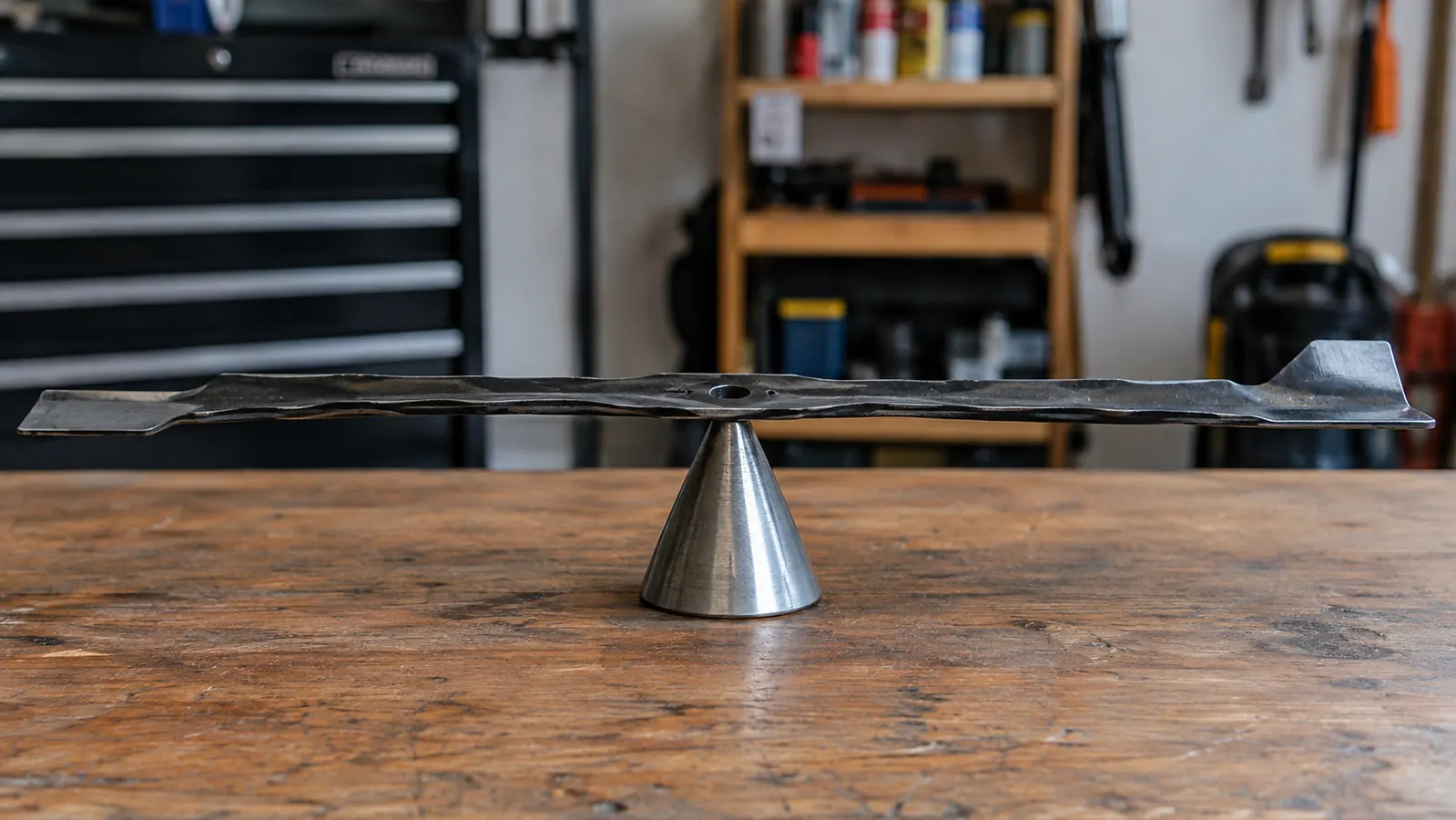
Amazon Check Today's Price on Amazon →Here is how the tool works, plain and simple. The sharpener clamps onto the blade and rides along the edge at a set angle, so you get the same bevel from one end to the other instead of the wavy edge you get when you try to freehand it on a bench grinder. The balancer is a cone with a collar. You drop the blade over the cone, and the heavy side dips. Then you take a little metal off that heavy side, set it back on the cone, and repeat until the blade sits level.
The first time I used it on my own mower, I had to take metal off the same blade three times before it sat level. That tells you how far off it was. After I reinstalled it, the vibration at full throttle was gone. Not reduced. Gone. The cut was cleaner too, because a blade that is not wobbling keeps a more consistent height across the deck.
The angle adjustment matters more than most people think. The SporGain lets you set the sharpening angle anywhere in the 15 to 45 degree range, and different decks and different grass conditions call for different angles. On my St. Augustine at home I run a slightly more aggressive angle than I do on the Bermuda. On the shop floor, I set the angle to match what the customer's deck and grass need, not what the last guy used.
Now, the honest part. The SporGain is not magic and it will not fix a blade that is bent, nicked up badly, or worn past its useful life. If the blade is bent, no sharpener and no balancer will save it. You replace it. And if you are the kind of person who sharpens blades twice a year and never hits rocks, you can get by with a cheaper sharpener and a cheap balancer. I have said that to customers at the counter more than once.
What the SporGain earns its spot for is doing both jobs with one tool, holding a consistent angle without a lot of fuss, and being built well enough that it will still be on your bench in ten years. For someone who mows a couple of acres every week through a long Texas season, that is the difference between a tool you use and a tool you trip over.
What I'd Tell You If We Were Sitting at My Kitchen Table
If you were sitting at my kitchen table, here is what I would tell you. Sharpen your blades more often than you think you need to, and balance them every single time you sharpen. A dull blade tears the grass instead of cutting it, and a torn blade of grass turns brown at the tip, which is how you get a lawn that looks fine from the road and rough up close. An unbalanced blade will shake your deck, wear your spindles, and make you chase a vibration that is not a spindle at all.
I would also tell you this. You do not need to spend a fortune to get a clean cut, but you do need to spend the twenty minutes it takes to do the job right. Pull the blades, sharpen them at a consistent angle, balance them on a cone, and put them back on with the right torque. Do that on a regular schedule and your mower will cut better, vibrate less, and cost you less in parts over the years.
If your deck vibrates at full throttle, start here
The SporGain sharpener and balancer is the tool I keep on my own bench. Check today's price on Amazon, and if you want the full picture, read the long-term review and the comparison against the Oregon balancer.
Amazon Check Today's Price on Amazon →