
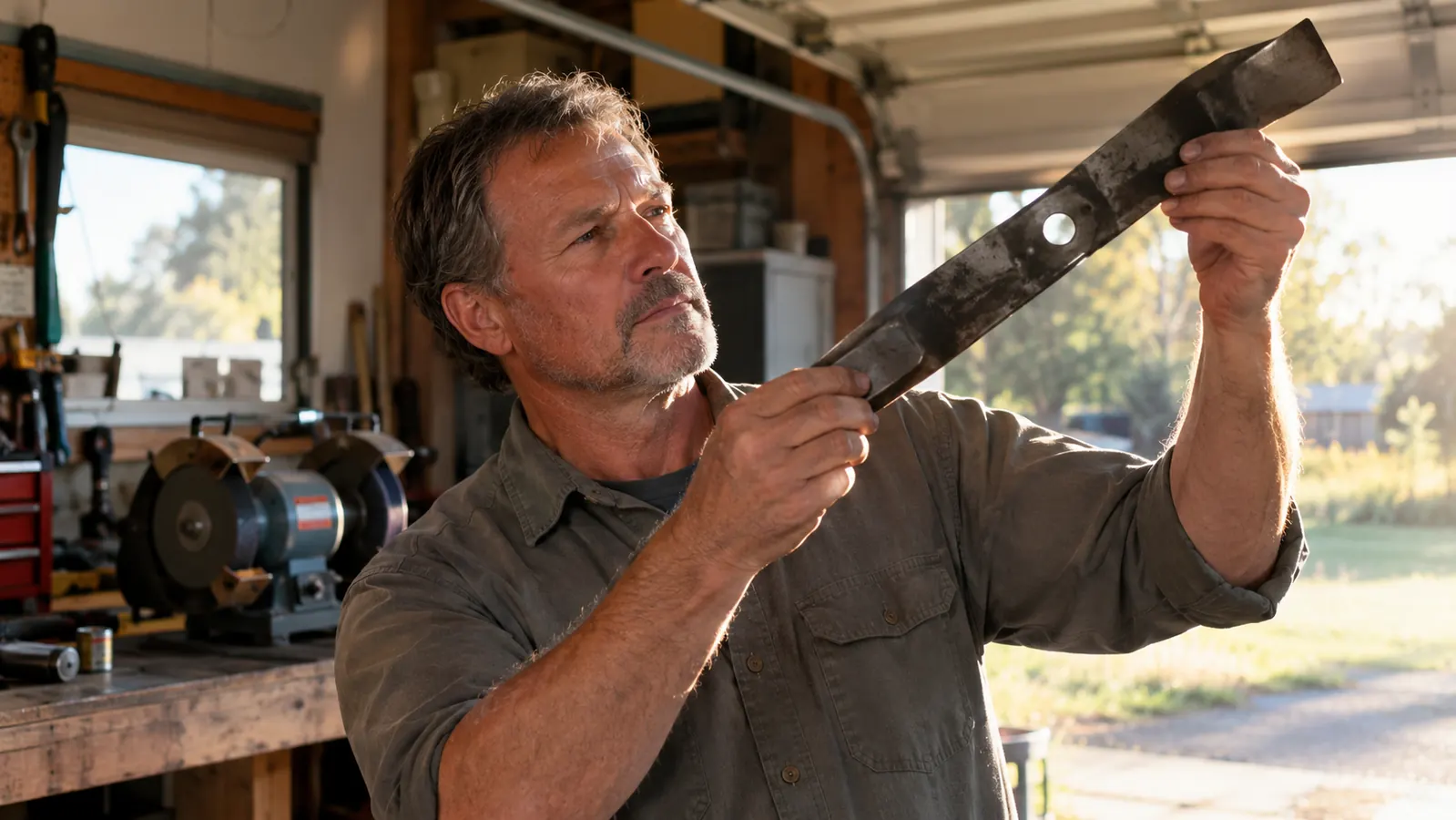
A dull blade is the most expensive part of mowing, and most people never see it. It tears the grass instead of cutting it, leaves a brown ragged tip on every blade of St. Augustine, and makes the deck work harder than it should. I have been a service tech at an outdoor power equipment dealership in East Texas for over 20 years, and I have pulled thousands of blades off zero turns that were worn past the point where sharpening would have helped. The fix is not hard. You can do it in the shop or on a bench at home, and the whole job takes about an hour for a 54 inch deck.
The part most people get wrong is not the sharpening. It is the balancing. A blade that is sharp but out of balance will shake the spindle, wear the bearings, and eventually cost you a spindle assembly that runs a good chunk of money. I keep a SporGain blade sharpener and balancer on my bench at home, and I use it on my own 54 inch zero turn about every 10 hours of mowing. Here is the exact method I use, start to finish.
The sharpener and balancer I keep on my own bench
The SporGain Lawn Mower Blade Sharpener and Balancer handles the whole job in one tool, with an adjustable guide that works on most zero turn blades. It is the one I reach for first on my own 54 inch deck.
Amazon Check Today's Price on Amazon →Step 1: Pull the blades and mark them before you forget which side is up
Block the deck solid before you go under it. I use a floor jack and a pair of jack stands on my garage floor, and I still give the deck a push with my hand before I trust it. On most residential zero turns, the blades are held on by a bolt in the center of the spindle. A 15/16 inch socket or a 1/2 inch impact will break it loose. If the bolt spins with the blade, hold the blade with a gloved hand or wedge a block of wood between the blade and the deck shell.
Before you pull the second and third blades, mark each one. A quick line with a paint pen on the top side and a note of which spindle it came from saves you a lot of head scratching later. Blades look alike until they do not. On my mower at home, the outside blades wear differently from the center one because the discharge path is different, and I want each blade to go back where it came from. Last spring I skipped the marking on a customer's mower to save time, and I put the center blade back on the right spindle backwards. It cut fine for about ten minutes, then started hammering so hard the customer heard it over the engine. I had to pull the deck twice that day. Mark the blades. It takes thirty seconds.
Check the blade for damage while it is off. If you see a bent edge, a deep nick, or a crack near the bolt hole, do not sharpen it. Replace it. Sharpening a damaged blade just makes a dangerous blade sharper. I tell customers at the counter the same thing: a blade is cheap insurance, a spindle is not. On a 54 inch deck, a new set of three blades runs less than the labor to replace one spindle, and that math has not changed in the twenty years I have been doing this.
Step 2: Clean the blade and check the cutting edge
Grass buildup under the deck and on the blade itself will wreck your edge and hide damage. Scrape the underside of the blade with a putty knife or a wire brush, then wipe it down with a rag. You want to see bare metal along the whole cutting edge before you start. If the edge is rolled over, that is normal wear. If it is chipped, that is a sign you hit something, and you need to look closer. I find most of the hidden damage on the back half of the blade, right where the grass packs on thickest.
The factory edge on most zero turn blades is around 30 degrees, and the SporGain sharpener has an adjustable guide that covers a range of angles. I set mine to match the existing bevel rather than trying to invent a new one. Matching the angle keeps the edge consistent across the full length of the blade, which matters more than most people think. A blade that is sharp at the tip and dull at the heel cuts unevenly and leaves streaks in the lawn. On my own blades I run the guide at the same setting every time, so the edge comes out the same on all three blades.
This is also the time to check the center hole and the washers. If the hole is wallowed out or the washers are worn, the blade will wobble no matter how well you sharpen it. Replace the washers if they look thin. They are a few dollars and they keep the blade running true. I keep a small box of assorted blade washers on the shelf at home, the same way I keep a box of them at the shop, because it is the kind of part you do not want to drive to town for on a Saturday morning.
Step 3: Sharpen with the guide, not freehand
I have sharpened blades freehand on a bench grinder for years, and I can get a decent edge. But freehand is exactly where most people go wrong. You rock the blade, you take more off one side than the other, and you end up with an edge that looks fine and cuts poorly. The SporGain sharpener rides flat on the blade and holds the angle for you, so the edge comes out even from one end to the other. That consistency is the whole point. I have watched customers at the shop grind a blade down to a quarter inch of its life in one session because they could not hold a steady angle.
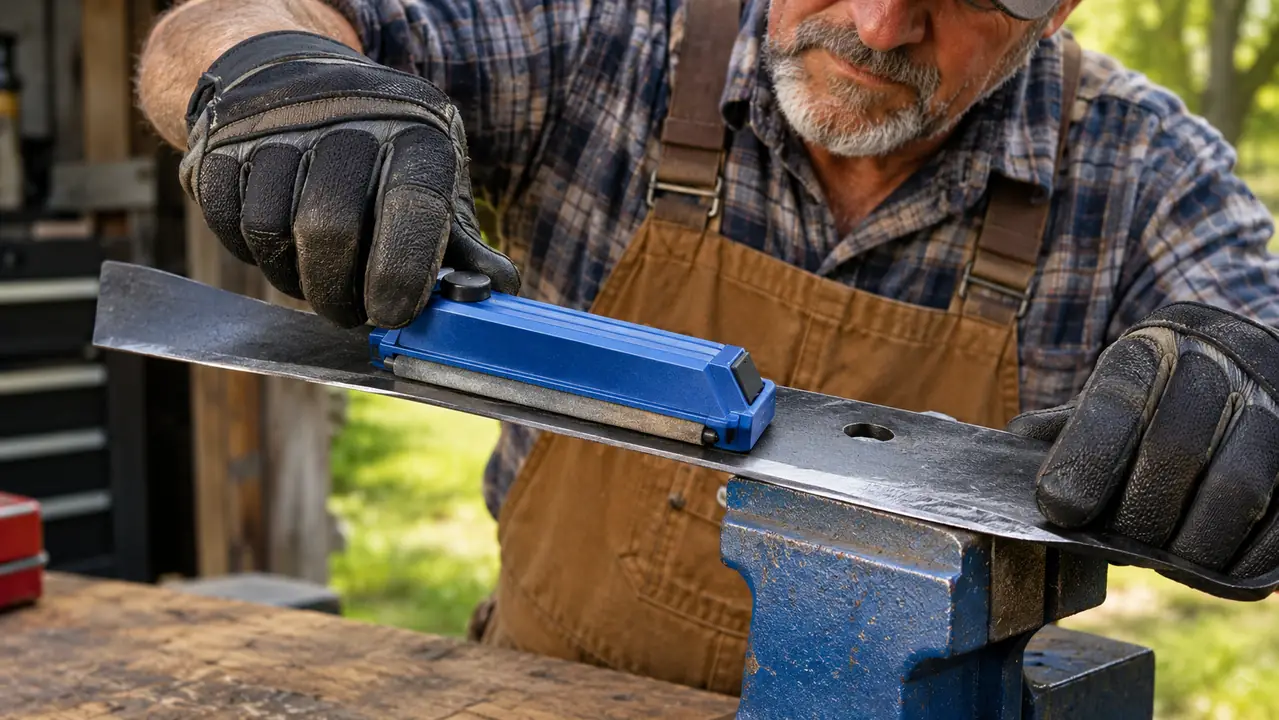
Clamp the blade in a bench vise with the cutting edge up. Run the sharpener along the edge in smooth passes, working from the heel toward the tip. Let the tool do the work. You are not trying to hog off metal. You are trying to restore a clean edge, and a few light passes beat one heavy pass every time. I check my progress by running a thumb lightly across the back of the edge, never along the cutting edge itself. On a badly rolled edge, I will do four or five light passes before I even look at it.
Keep the blade cool. If the edge starts to turn blue, you are pushing too hard and you have drawn the temper out of the steel. A blue edge will not hold an edge. Stop, let it cool, and take lighter passes. On my own blades, I do one blade, set it aside, and do the next one so each has time to cool before I go back to it. In July, when the garage is hot, I will set a blade in front of the box fan for a few minutes between passes. It sounds fussy, but a blade that loses its temper is a blade you get to sharpen again in two mowings.
Step 4: Balance the blade on the cone
Here is the step most people skip, and it is the one that protects your spindles. A blade that is sharp but heavy on one side will vibrate at high speed. That vibration hammers the spindle bearings, and on a zero turn it shows up as a shake you can feel in the seat. I have replaced spindles on mowers that were only a couple of years old because the owner sharpened the blades and never balanced them. One of those was a machine with under 200 hours on it, and the owner told me he had sharpened the blades three times and never once put them on a balancer.
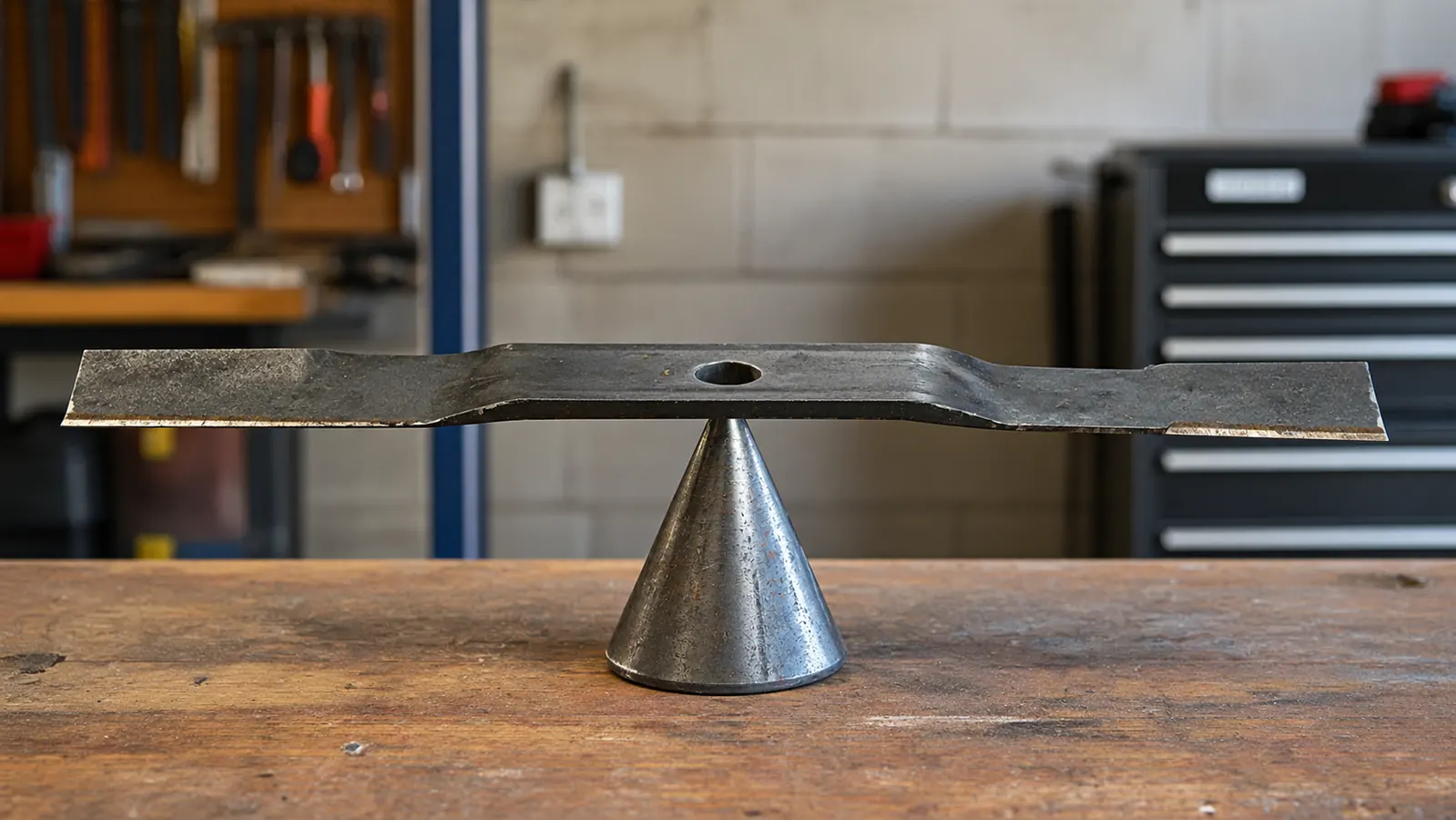
The SporGain balancer is a cone that sits on a flat base. Set the blade on the cone by the center hole and let it settle. The heavy side will drop. That is the side you need to take a little more metal off. I take a light pass on the heavy side, set the blade back on the cone, and repeat until the blade stays level. It usually takes two or three passes, not twenty. The first time I used a cone balancer, I was skeptical that it could tell me anything a careful eye could not. Then it dropped the same blade to the same side three times in a row, and I stopped arguing with it.
Balance matters more on a zero turn than on a push mower because the blades spin faster and the deck is wider. A small imbalance that you would never notice on a 21 inch mower turns into a noticeable vibration on a 54 inch deck. Take the extra five minutes. Your spindle bearings will last longer, and the cut will look better. I balance all three blades on my mower at home every time, even when I am in a hurry, because I have seen what an out of balance blade does to a spindle over a season.
Step 5: Reinstall the blades and check the deck
Put each blade back on the spindle it came from, with the marked side up. Torque the bolt to the spec in your manual. If you do not have the number, a good rule of thumb is 70 to 90 foot-pounds for most residential zero turns, but the manual is the authority. I use a torque wrench on my own mower at home because it is easy to be lazy with an impact gun, and an undertorqued blade can loosen and spin on the spindle. I have seen a loose blade wallow out the bolt hole and ruin a spindle in one afternoon of mowing.
Before you put the deck back on or lower the mower, spin each blade by hand and listen. A blade that is balanced will spin smoothly and stop smoothly. A blade that is out of balance will wobble and rock. This is the last chance to catch a problem before the deck goes back under the mower. I also give the spindle a gentle side to side push while the blade is off. If it moves or makes noise, that spindle is telling you something, and it is a lot easier to address it on the bench than in the yard.
After the first mow, check the blades again. If the cut looks ragged or the mower vibrates, pull the blades and recheck the balance. Nine times out of ten, a quick pass on the heavy side fixes it. I also check the blade bolts after the first hour of mowing, because a new sharpening job can seat the blade and loosen the bolt a hair. On my own mower, I do this check on the first cut after every sharpening, and it has caught a loose bolt twice in the last three years.
What Else Helps
A sharp blade is only part of a good cut. Keep the underside of the deck clean, because a buildup of wet grass will ruin the airflow and leave clumps no matter how sharp the blades are. I scrape my deck every few mows and give it a quick rinse when I am done. I also check the deck level side to side and front to back once a season. A deck that is out of level will cut unevenly even with brand new blades. And if you mow sandy soil, expect to sharpen more often. Sand is abrasive, and it wears an edge fast. On my place in East Texas, with St. Augustine and Bermuda, I sharpen about every 10 hours of mowing. If you mow clean fescue on soft ground, you can stretch that further. The SporGain sharpener and balancer has been on my bench for a full season now, and it is the tool I reach for when the cut starts to look ragged.
A blade that is sharp but out of balance will shake the spindle, wear the bearings, and eventually cost you a spindle assembly. The balancing takes five minutes. Skip it and you will pay for it later.
Do the whole job with one tool
The SporGain sharpener and balancer covers the two steps that matter most: a consistent edge and a blade that runs true. It is the tool I keep on my bench, and it is the one I would hand a customer who wants to do the job right.
Amazon Check Today's Price on Amazon →