
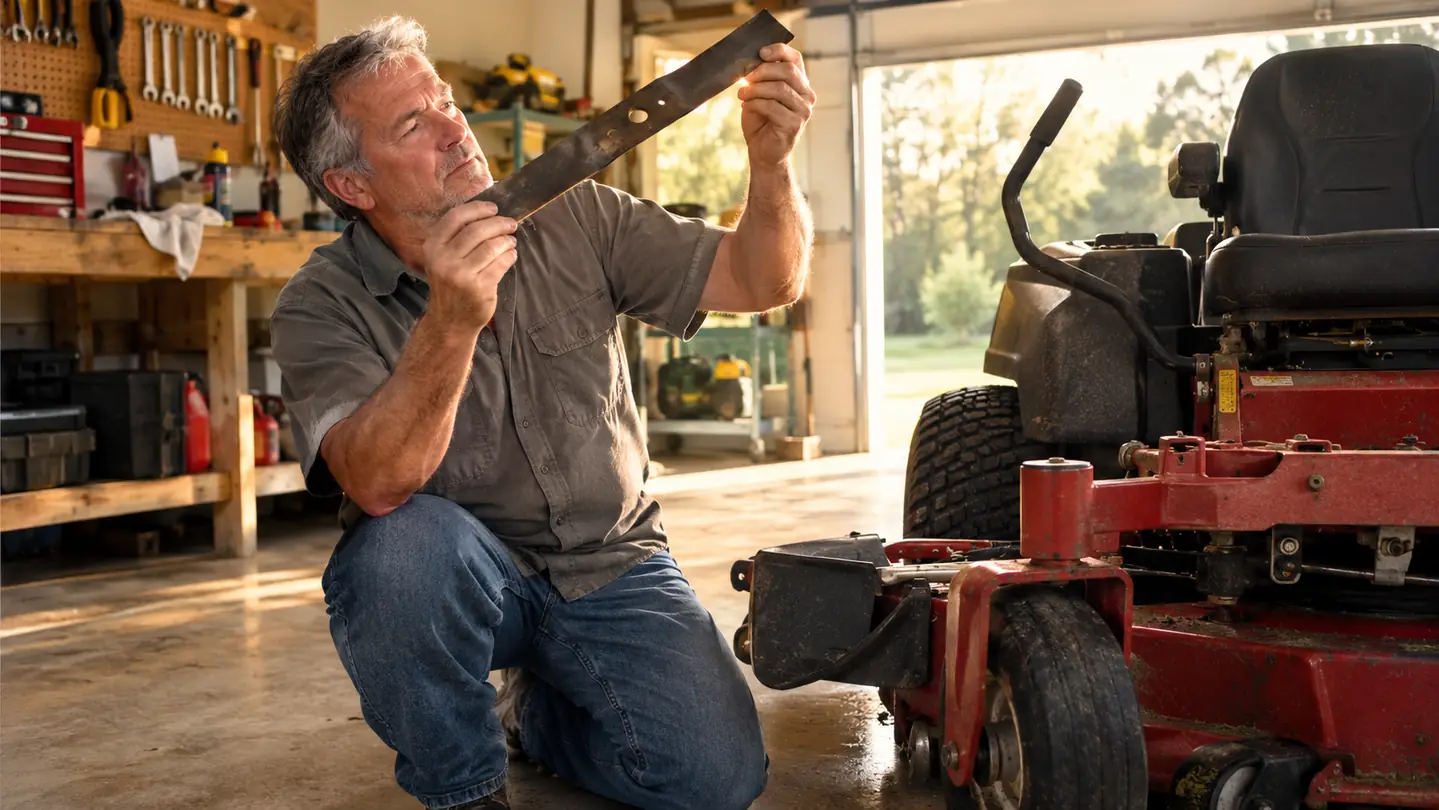
I have been turning wrenches on zero turns for over 20 years, and I will tell you straight: most aftermarket blades are fine, a few are junk, and very few make you look twice. The UDC Parts 54 inch high lift blades made me look twice. I bought a set for my own 54 inch zero turn at home, ran them through a full season on about two and a half acres of St. Augustine and Bermuda, and I have opinions. Some of them are not in the Amazon listing.
If you are shopping for Husqvarna 54 inch deck blades, you have probably seen the UDC Parts 532187256 set with the five point star center hole. It has over five thousand ratings and a 4.5 star average, which is the kind of number that makes a tech like me suspicious. So I tested them the way I test everything: bolted them on, mowed with them, sharpened them, and looked at the cut after a month, then after a season.
The Quick Verdict
A well made high lift blade that throws clippings hard and bags well, at a price that undercuts the dealer counter. The tradeoff is the same one every high lift blade has: you give up some deck lift in wet grass and you will sharpen more often.
Amazon Check Today's Price →A full season of hard mowing, one honest verdict
I ran these UDC Parts high lift blades on my own 54 inch zero turn for an entire season. They cut clean, threw clippings into a windrow, and held an edge longer than I expected. If you want the same set, check today's price on Amazon.
Amazon Check Today's Price on Amazon →How I Tested These Blades
My test mower is a residential zero turn with a 54 inch deck, the same deck size these UDC Parts blades are made for. My yard is about two and a half acres of St. Augustine and Bermuda, which means I mow roughly every five to seven days from March through October. That is a lot of hours on one set of blades, and it is a better test than anything I can do in the dealership bay.
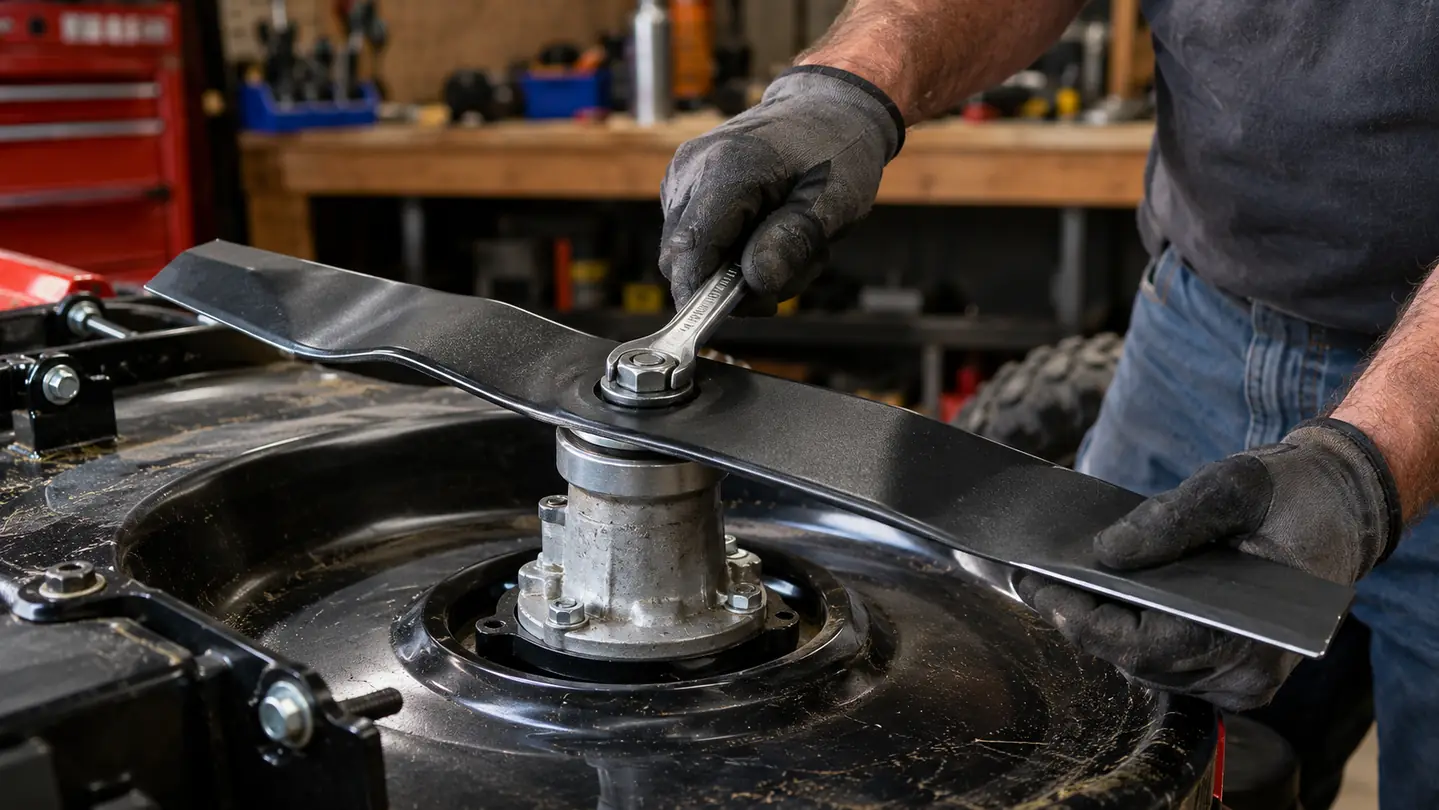
I installed the UDC Parts blades myself in my garage at home, using a floor jack to lift the deck and a torque wrench on the spindle bolts. The five point star center hole lined up exactly with the spindles on my deck, and the blades were balanced out of the box. I checked them on a blade balancer before I put them on, because I have seen aftermarket blades come from the factory with enough wobble to shake a spindle loose. These were true.
I want to be upfront about how I judge blades, because it is different from how most reviews do it. I see the failures. Every season, mowers come across our service counter with blades that cracked at the mounting hole, wings that folded flat after one season, or center holes that wallowed out because the steel was too soft. So before I trusted the UDC Parts set on my own machine, I put each blade on the balancer at the shop, checked the center hole with a spare spindle and ran a straightedge along the length of each one. All three came out of the package flat and balanced closely enough that I did not touch them with a grinder before the first mow.
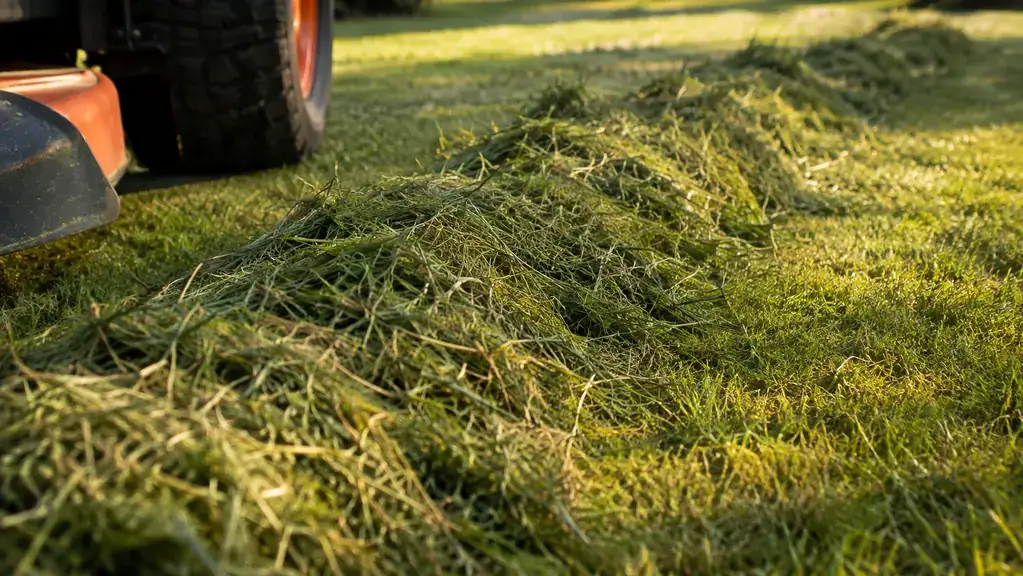
For the first cut I left the deck at my normal 3.5 inch height. The difference was obvious in the first lap: the UDC Parts blades throw clippings harder than the standard blades I had on before. Instead of a thin scatter behind the deck, I got a clean windrow on the discharge side. That is the whole point of a high lift blade, and these do it.
What Nobody Tells You About High Lift Blades
Here is the part the listing does not put in bold. A high lift blade moves more air, and moving more air takes more horsepower. On my 54 inch zero turn, I could feel the difference in thick spring Bermuda. The engine pulled down a little more on the discharge side, and in the thickest patches I had to slow down to keep the cut clean. That is not a defect in the UDC Parts blades. That is physics, and it applies to every high lift blade on the market.
The second thing nobody tells you: high lift blades dull faster than standard blades. They are scooping up more grass and more debris, so the edge takes more abuse. I sharpened my UDC Parts blades twice during the season, once in early June and once in August. On a standard blade I might have gotten away with one sharpening in the same period. If you are the kind of person who never sharpens, a high lift blade will punish you with a ragged cut by midsummer.
In practice that meant I sharpened the UDC Parts blades twice over the season, once in late June and again in late August, where a standard blade on the same lawn might go the whole summer on one sharpening. Each pass took me about twenty minutes from lifting the mower to letting it back down, and that included balancing. That is not a reason to skip high lift blades, but it is a cost you should know about up front. If you are not willing to pull your blades at least once in the middle of the season, you will see the cut quality fall off in July and blame the blades, when the real issue is that high lift steel works harder and wears faster.
The third thing is wet grass. If you mow when the grass is damp, a high lift blade will clump worse than a standard blade, because it is pulling more material up into the deck at once. I learned that the hard way on a humid East Texas morning. The UDC Parts blades left golf ball sized clumps in the low spots. My fault for mowing wet, but it is worth knowing before you buy.
I have seen aftermarket blades come from the factory with enough wobble to shake a spindle loose. These UDC Parts blades were true out of the box.
Cut Quality Over a Full Season
I judge a blade on three things: how clean the cut is, how even the discharge is, and how long the edge lasts. The UDC Parts blades scored well on all three, with one caveat.
The cut was clean from the first mow to the last. I did not see the torn grass tips you get from a dull or poorly designed blade, and the St. Augustine came out looking like it had been clipped with scissors. The high lift design also did a better job of standing the grass up before the cut, which gives a more even finish on Bermuda that has gotten a little shaggy between mowings.
Discharge was the strong point. On dry grass, the UDC Parts blades threw clippings a good two to three feet past the discharge chute, which meant I could mow a full lap without worrying about clumps building up under the deck. When I used the bagger, the difference was even more noticeable. The bags filled more evenly and I emptied them less often, because the high lift blades were keeping the clippings moving all the way to the back of the bag.
The one place I watched discharge fall off was the morning cuts. Twice in September I mowed early, before the dew had burned off, and both times the UDC Parts blades threw wet clippings in heavy clumps instead of a spray. That is the airflow working against you, because wet grass sticks to itself and to the underside of the deck. After each of those mows I scraped a layer of packed grass off the deck shell. It is not a flaw unique to these blades, every high lift blade does it, but it is the reason I now wait until mid morning to mow, and it is advice I give every customer who runs a high lift set.
The caveat is the one I already mentioned. By late August, after two sharpenings and a lot of hours, the edge was not what it was in May. That is normal wear for a high lift blade, and it is the tradeoff you accept when you buy one. If you want a blade that stays sharp for six months with zero maintenance, buy a standard lift blade and mow slower. If you want the best cut and the best bagging, buy these and plan to sharpen.
Build Quality and Fit
I have installed enough aftermarket blades to know that fit is not guaranteed. Some blades need the center hole opened up with a file. Some have the wrong offset and sit crooked on the spindle. Some are balanced so badly they vibrate the whole deck. The UDC Parts blades needed none of that. The five point star pattern matched the spindles on my deck exactly, the blades sat flat, and the balance was good on all three.
The steel is what I would call honest. It is not the soft metal you get on the cheapest blades, which fold over at the edge after one season. It is also not the hardened steel of a premium OEM blade, which costs two to three times as much. The UDC Parts blades sit in the middle: hard enough to hold an edge for a reasonable stretch, soft enough that you can sharpen them with a bench grinder without ruining the temper. For a homeowner who sharpens their own blades, that is actually the sweet spot.
To put that in shop terms, the UDC Parts blades took a nick from a buried sprinkler head in August and the steel dented rather than chipped. A dent you can grind out. A chip that runs toward the center is how a blade cracks, and a cracked blade is how a piece of steel ends up leaving the deck at full speed. I ground the dent out, rebalanced the blade and kept mowing. I have seen cheaper aftermarket blades shatter at the tip from the same kind of hit, so this is the part of the review I would weight most heavily if I were buying. A blade that fails soft is a blade I am comfortable putting on a customer's mower.
One thing I checked specifically was the thickness at the mounting hole. That is where cheap blades fail, because the metal deforms around the spindle bolt and the blade starts to rock. After a full season, the UDC Parts blades showed no deformation around the hole. That tells me the steel is consistent, not just hard on the surface.
Who This Is For
These UDC Parts 54 inch high lift blades are for the homeowner who wants a better cut and better bagging without paying dealer prices. If you mow a yard that is mostly dry, you bag at least some of the time, and you are willing to sharpen your blades a couple of times a season, these are a strong buy. They are also a good choice if you have a Husqvarna 54 inch deck and you want to know what high lift blades feel like without spending OEM money to find out.
They are especially good for the owner who bags in spring and fall and side discharges in the summer heat. The high lift wing fills the bagger to the back and spreads clippings evenly when the bagger comes off, so one set of blades covers both jobs. They also suit someone who is comfortable pulling and sharpening their own blades, or who is willing to pay a shop to do it twice a season. If that is you, the UDC Parts set gives you most of what a factory blade gives you, and in my experience on my own mower, it held up through a full East Texas summer without asking for anything more than two sharpenings.
Who Should Skip It
Skip these if you mow wet grass often, because the high lift design will clump. Skip them if you never sharpen your blades, because a high lift blade gets dull faster than a standard one and the cut will show it. And skip them if your yard is mostly open and you do not care about bagging, because a standard lift blade will do the job with less strain on the engine and a longer edge life. There is no shame in that. The right blade is the one that matches how you actually mow.
What I Liked
- Strong airflow that fills a bagger to the back
- Clean cut on St. Augustine and Bermuda through a full season
- Arrived flat and balanced, no grinding needed before the first mow
- Steel dents rather than chips when it hits something
- Five point star center hole seated cleanly on all three spindles
Where It Falls Short
- Needs a sharpening pass mid season, sometimes two
- Throws wet clippings in clumps if you mow before the dew burns off
- Pulls engine RPM down in thick grass on smaller engines
Alternatives I Considered
I considered the OEM Husqvarna blades, which are the safe choice. They fit perfectly, they are made to the original spec, and they cost more. I have sold a lot of them over the counter, and I have never had a customer come back complaining. The reason I did not put a set on my own mower is the price. The UDC Parts blades do the same job for a fraction of the cost, and after a full season I do not see a difference in cut quality that justifies the premium.
I also considered a standard lift aftermarket blade, which would have cost less and held an edge longer. But I wanted the bagging performance, and the UDC Parts blades delivered it. If I did not bag, I would probably run a standard lift blade and sharpen less often. Since I do bag, the high lift design is worth the extra maintenance.
The bottom line from the shop bench
After a full season on my own 54 inch zero turn, the UDC Parts high lift blades earned their spot on my mower. Good fit, good balance, clean cut, and noticeably better bagging. Check today's price on Amazon and see if they are the right fit for your deck.
Amazon Check Today's Price on Amazon →