
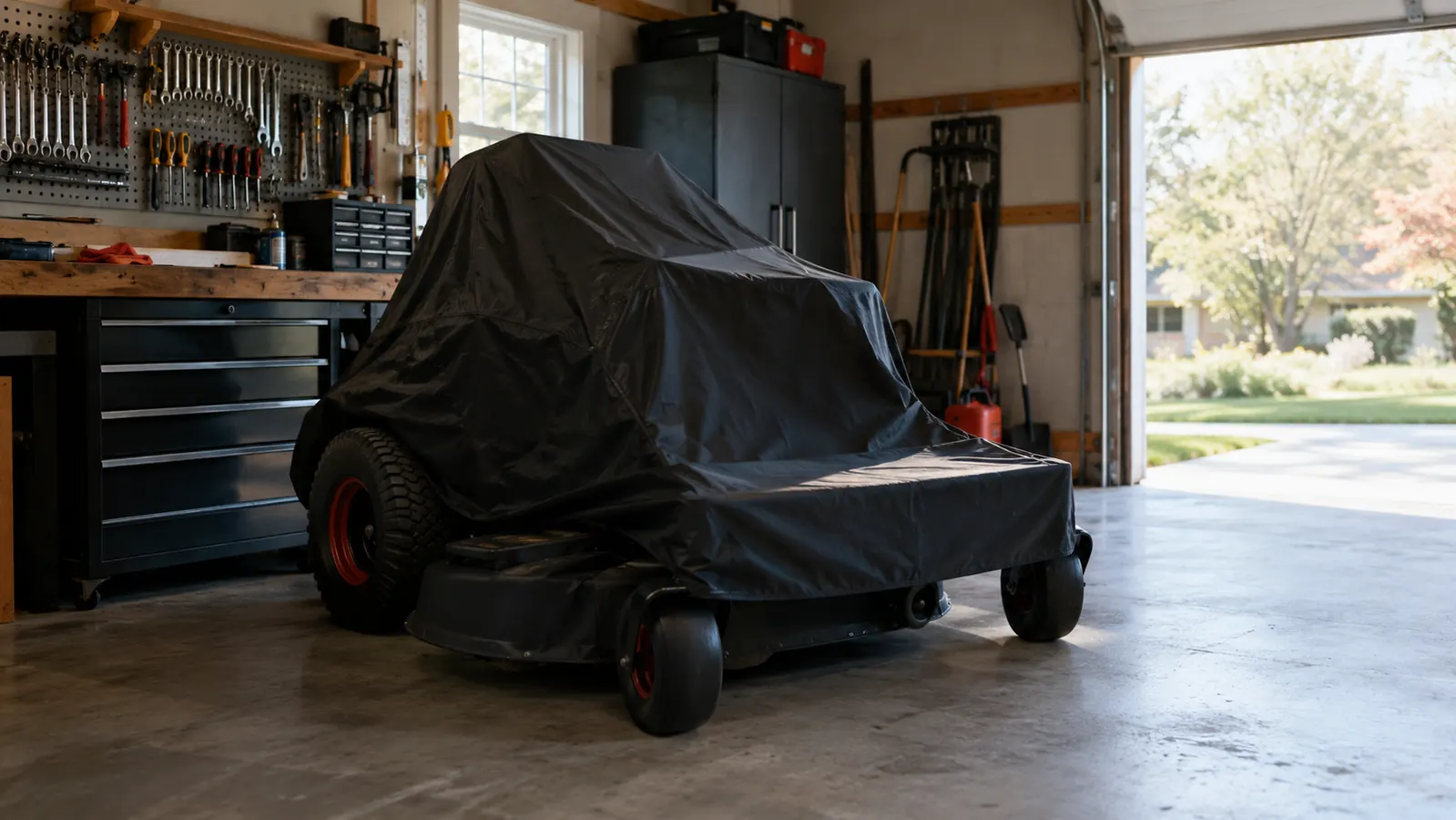
I have spent over 20 years on the bench at a small-town outdoor power equipment dealership in East Texas, and I can tell you exactly what a summer storm does to a zero turn that gets left outside. I have also been that customer. My own 54 inch zero turn sat uncovered behind my detached two-bay garage for the first two summers I owned it, because I figured a mower is built to work in the weather, so why baby it? Then a storm came through one August night and changed my mind. This is the story of that storm, and the reason I finally bought a Tough Cover for my mower at home.
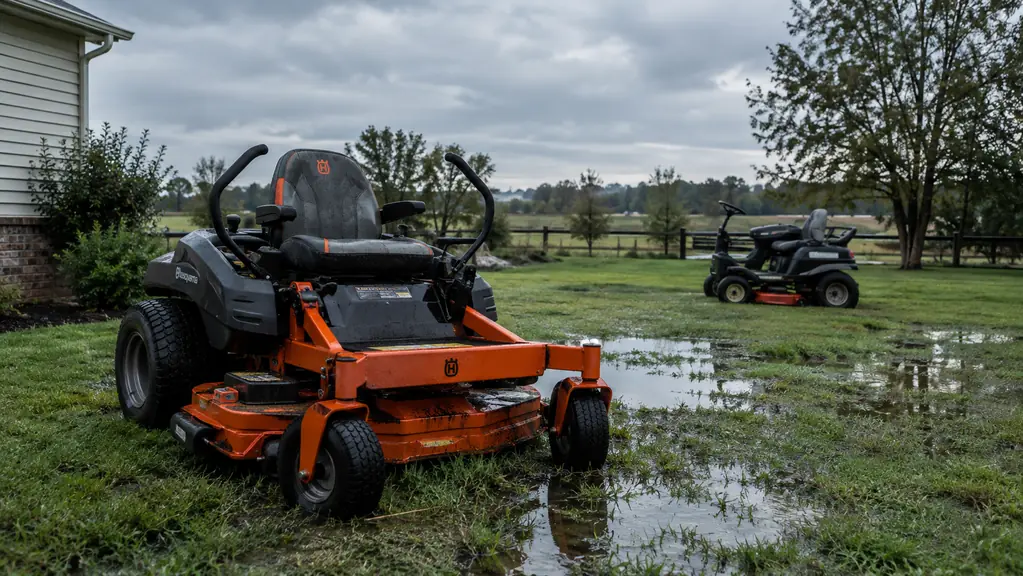
The storm itself was not even a named one. Just a line of thunderstorms that rolled through after midnight, the kind we get a dozen times a summer. Rain came in sideways, the wind gusted hard enough to rattle the garage door, and by morning the sun was out like nothing had happened. I walked out to check on the mower and found the seat soaked, water standing in the deck, and a layer of wet leaves and twigs packed into every opening. Nothing looked broken. That is the part that fools people.
The damage from weather is almost never the dramatic part. It is the slow part. Water sits in the deck and works its way into the spindle bearings. Moisture gets under the seat and into the switch wiring. The belt gets wet, then dusty, then glazed. A few weeks later the customer brings it in saying the mower sounds different, or the deck is hard to raise, or the battery keeps dying. I take the cover off, and I can see the story written in rust and corrosion. I have written that story on my own mower too.
The morning after that storm, I did what I tell every customer to do. I pulled the seat off, dried everything I could reach, blew the water out of the deck with the shop compressor, and sprayed the exposed metal with a little light oil. It took the better part of an hour. That hour is the real cost of leaving a mower uncovered. Not the dramatic failure, just the steady drip of your time and the slow death of small parts. I decided right then that I was done being the guy who skips the cover.
The damage from weather is almost never the dramatic part. It is the slow part: water in the spindles, corrosion in the wiring, and an hour of your Saturday spent drying out a mower that should have been covered.
Stop Drying Out Your Mower After Every Storm
A fitted cover keeps rain, dew, and dust off the seat, the deck, and the wiring. That is the whole job, and it does it well.
Amazon Check Today's Price on Amazon →I ordered a Tough Cover the same week. I will be straight with you: I did not buy it because I thought it was the only cover on the market. I bought it because I have seen what happens to mowers that sit uncovered, and because the Tough Cover is the one I keep recommending to customers who ask. The 600D fabric is heavier than the cheap tarps most people use, it fits over the deck and the seat without flapping around, and it has held up through two full East Texas summers since. That is not a paid endorsement. That is a service tech telling you what he has watched work.
Here is what I learned in the first year of using it. The cover does not just protect the mower from rain. It protects it from the sun, which is the bigger enemy in Texas. UV breaks down the seat vinyl, fades the decals, and dries out the rubber in the tires. A covered mower sits in the shade of its own cover. It also stays cleaner, which means I spend less time blowing leaves and dust off the deck before I mow, and more time actually mowing. My mower at home starts easier, the deck raises smooth, and I have not had to replace a single spindle bearing since I started covering it.
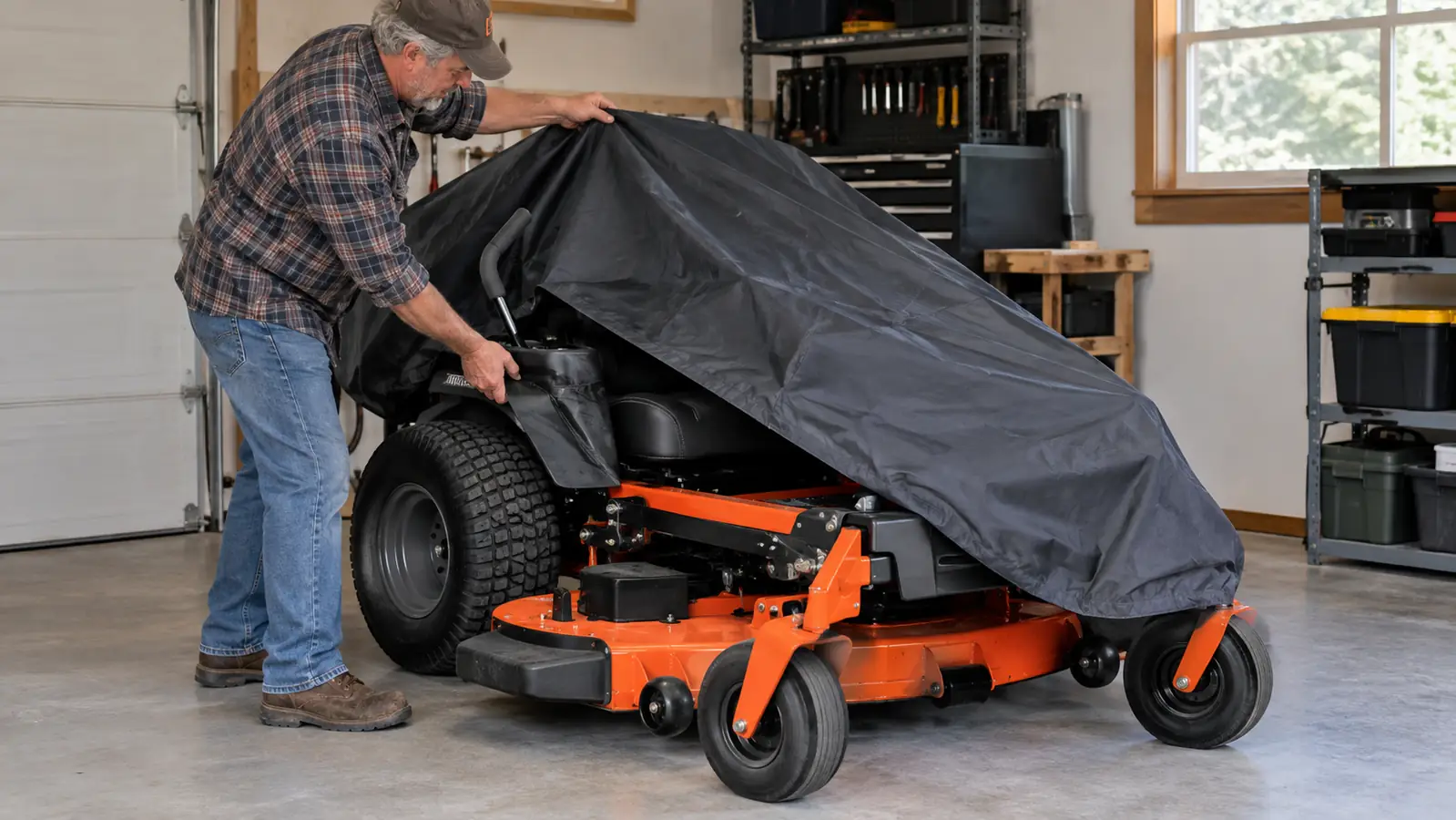
The honest tradeoff is that a cover is one more thing to take off and put on. It takes me about a minute. I drape it over the seat, pull it down over the deck, and tuck the elastic hem under the edges. When I am in a hurry, I skip the tuck and just let it hang. It still does the job. The other tradeoff is that no cover is indestructible. The Tough Cover has a couple of small wear spots where it rubs against the sharp edge of the deck, and I patched them with a piece of tape. That is normal. A cover is a wear item, like a belt or a blade, and it is a lot cheaper to replace than a wiring harness.
What I'd Tell You If We Were Sitting at My Kitchen Table
If you were sitting at my kitchen table, I would tell you this: a zero turn is a machine with a lot of small, expensive parts that do not like water. The seat switch, the ignition switch, the spindles, the bearings, the belt, the battery. Every one of those is cheaper to protect than to replace. A cover is not a luxury add-on. It is the cheapest maintenance item on the whole machine. You do not need the most expensive cover on the shelf, and you do not need to cover the mower every single night. But when a storm is coming, or when the mower is going to sit for more than a day, put the cover on. Your future self, standing in the shop with a rusted spindle in his hand, will thank you.
Give Your Zero Turn the Same Cover I Use at Home
The Tough Cover fits up to a 60 inch deck, takes about a minute to put on, and has earned its spot in my garage. See today's price on Amazon.
Amazon Check Today's Price on Amazon →