
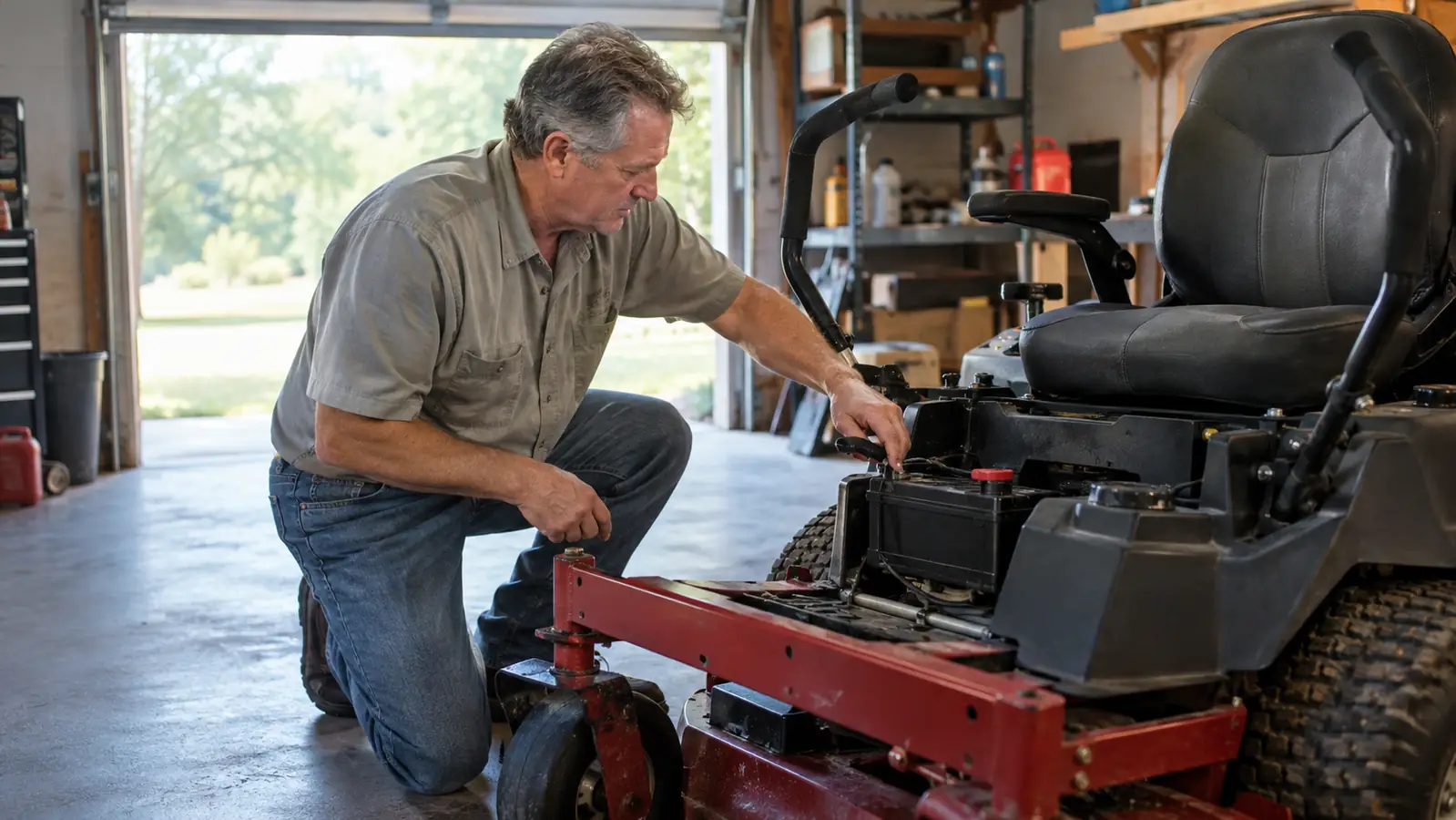
If you work on zero turns for a living, you learn to spot the customers who are going to need a battery every spring. They are the ones who park the mower in October, throw a tarp over it, and figure the battery will be fine because the machine is under cover. Come March, they call the shop and say it won't crank. I have sold a lot of batteries that way over twenty years on the bench. The fix is not a bigger battery. It is a maintainer that sits on the shelf for less than the cost of one jump start, and the one I keep on my own 54 inch zero turn at home is the Battery Tender Junior.
I have had the same Battery Tender Junior on my mower at home for years now, through East Texas summers that cook a battery and winters that let it sit for weeks at a time. It is the 750 milliamp model, the little one, and it has outlasted two batteries that it was supposed to be protecting. That sounds backwards until you understand what a maintainer actually does. It does not charge a dead battery fast. It holds a good battery at full charge and lets the mower sit for months without the voltage bleeding down to nothing.
The Quick Verdict
The Battery Tender Junior is the cheapest insurance you can buy for a zero turn that sits. It will not fast-charge a dead battery, and the leads are short, but for keeping a battery alive through the off-season it has done the job for me for years without a single failure.
Amazon Check Today's Price →Keep your zero turn ready to crank in March
The Battery Tender Junior holds a battery at full charge through months of sitting, and it has done exactly that on my own mower for years. It is a small price for not calling the shop in the spring.
Amazon Check Today's Price on Amazon →How I've Used It
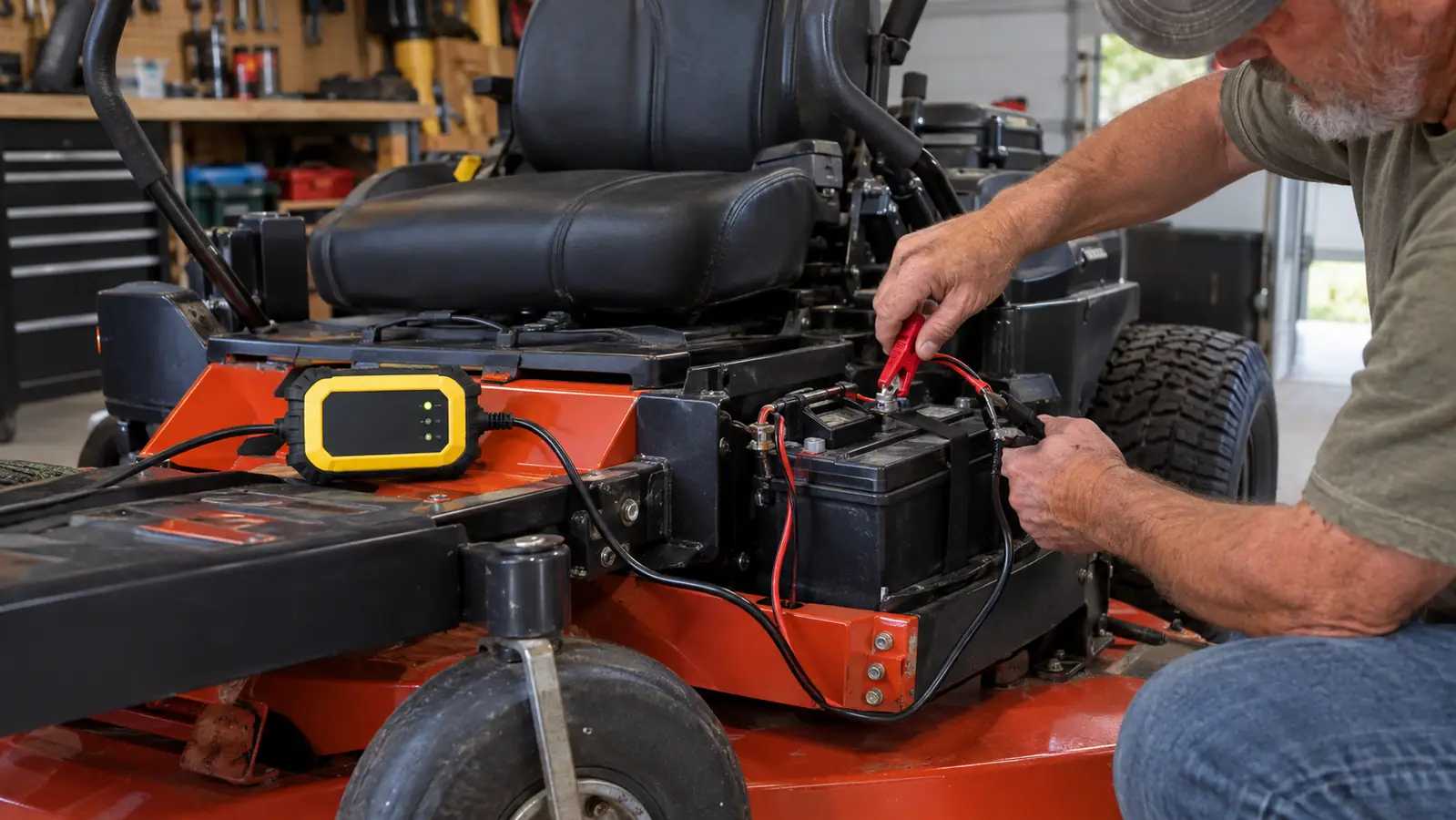
My setup is simple. The mower lives in a detached two-bay garage at home, and the Battery Tender Junior hangs on the frame near the battery box. The leads run to the battery posts, and the cord reaches the outlet on the wall behind the workbench. I plug it in when the mower is parked for more than a few days, and I unplug it when I am actually using the mower. That is the whole routine.
The Junior is the 750 milliamp version, which matters. A bigger maintainer, like the 1.25 amp model, will do the same job a little faster, but for a zero turn that sits for weeks at a time, 750 milliamps is plenty. The battery is not being drained by anything while the mower is parked, so the maintainer only has to replace the natural self-discharge. That is a small load, and the Junior handles it easily.
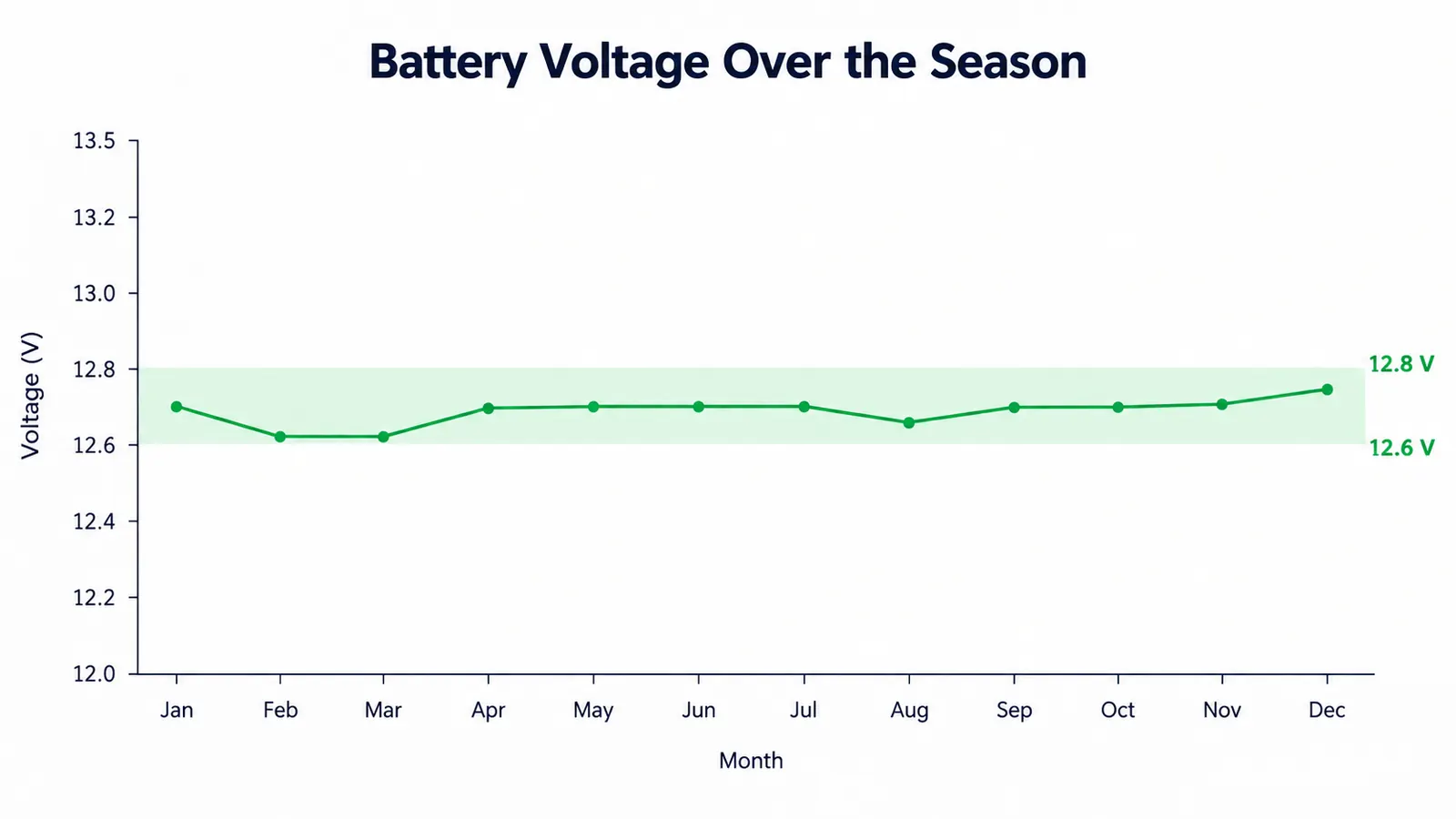
I have used it through two full off-seasons and part of a third. The mower sits from around Thanksgiving to early March most years, and the battery has been at full charge every time I have gone to crank it. Before I started using a maintainer, I was replacing the battery on that mower about every two years. The battery that is in it now is in its fourth year, and it still cranks the engine over like it is mid-summer.
One detail from last winter is worth telling. We had a cold snap in mid-January, three nights in a row down in the mid twenties, which is cold for East Texas. I walked out to the garage on the third morning, checked the light on the Junior, and it was showing the solid green that means the battery is full and being held there. I hit the key and the engine turned over like it was a warm April afternoon. That is the whole point of the tool, and it did not miss a beat.
What the Battery Tender Junior Actually Does
The Battery Tender Junior is a smart maintainer, not a trickle charger. That distinction matters, and it is the reason I trust it to stay connected for months. A plain trickle charger pushes a fixed current all the time. Leave one connected long enough and it will overcharge the battery, boil off the electrolyte, and leave you with a dead cell. The Junior monitors the voltage and switches between charging and maintaining automatically. When the battery is full, it drops to a float charge that holds the voltage without cooking the battery.
The output is 750 milliamps at 12 volts, which is enough to maintain a battery that is already in good shape. It is not a charger for a battery that is completely dead. If you let a battery sit all winter without a maintainer and it drops below about 10.5 volts, the Junior will not bring it back. It will try, but a deeply discharged battery is usually sulfated by then, and no maintainer is going to fix that. That is the honest limit of this unit, and it is the same limit on every maintainer in this size class.
The unit is also weather resistant, which matters if you leave it connected in a garage that is not climate controlled. Mine has been through plenty of humid East Texas summers hanging on the mower frame, and it has never given me a problem. The case is sealed well enough for garage use, though I would not mount it where it is going to get direct rain.
Here is the test I run at the shop when a customer brings in a mower that sat all winter and will not crank. I put a meter on the battery first. If it reads under 10.5 volts, I tell them the battery is likely sulfated and the maintainer is not the fix. If it reads 11.5 or better, I put it on a real charger, bring it up, and then hand them a Junior with the ring terminals already installed. That is the honest division of labor: the charger fixes what got hurt, and the Junior keeps it from getting hurt again.
How It Holds Up Over Years of Use
The Battery Tender Junior is not a complicated piece of equipment, and that is part of why it lasts. There is no fan, no display, no buttons to wear out. The status light tells you what it is doing, and the unit just sits there doing its job. Mine has been plugged and unplugged hundreds of times, dropped on the concrete floor at least twice, and run over by a caster once. It still works.
The leads are the one thing I would change. They are about 18 inches long, which is fine for a motorcycle or ATV, but on a zero turn you often have to mount the unit close to the battery or add a short extension. I have mine mounted on the frame right next to the battery box, so the short leads are not a problem for me. If your battery is in an awkward spot, plan on either mounting the unit nearby or using an extension harness.
The ring terminals that come with it are the ones I use. They bolt directly to the battery posts, and the quick disconnect lets me unplug the maintainer without pulling the rings off. That is a nice touch. I leave the rings on the battery year round and just unplug the cord when I am mowing. It takes about two seconds.
I will also say this about the cord. The AC cord is about six feet long, which is short if your mower is parked in the middle of a big shop. At home I solved it by running a cheap extension cord along the wall of the garage to the outlet behind the workbench, then hanging the Junior on the mower frame so the cord does not lie on the floor where I can trip over it. That setup has been in place for three seasons now, and I have not touched it since.
The battery in my mower at home is in its fourth year, and it still cranks like it is mid-summer. Before I started using a maintainer, I was replacing that battery every two years.
The Tradeoffs You Should Know About
The biggest tradeoff is the one I already mentioned: the Junior is a maintainer, not a charger. If you are the kind of person who lets the battery run all the way down before you think about it, this unit will disappoint you. It is not designed to bring a dead battery back to life. It is designed to keep a good battery good, and it does that very well.
The second tradeoff is the cord. The AC cord is about six feet long, and the output leads are short. On a zero turn, that usually means you need an outlet within reach of the mower or an extension cord. I have an outlet right behind my workbench, so it works for me. If your mower is parked far from an outlet, you will need to plan the setup.
The third thing is that the status light is small. It is bright enough to see from across the garage, but if you are expecting a big digital display with voltage readouts, this is not that. The Junior is a simple tool. It has one light that tells you it is charging, one that tells you it is maintaining, and one that tells you there is a problem. That is all you need, but it is worth knowing before you buy.
One more honest note. The Battery Tender Junior is not the unit I reach for when a customer needs to maintain three machines at once. For that I recommend a multi-bank unit. But for the single mower at home, the Junior has been the right tool, and I have not found a reason to move up to the bigger model. The 750 milliamp output is enough for the job it is asked to do.
What I Liked
- Keeps a good battery at full charge for months at a time
- Automatic float mode means you can leave it connected without cooking the battery
- Simple, sealed design with no fan or display to fail
- Ring terminals and quick disconnect make hookup a two second job
- Cheaper than one service call, and it has lasted me years
Where It Falls Short
- 750 milliamp output will not bring a deeply discharged battery back
- Short leads mean you may need to mount it near the battery or add an extension
- No voltage display, just status lights
- AC cord is on the short side for a mower parked far from an outlet
Who This Is For
The Battery Tender Junior is for anyone who parks a zero turn for more than a couple of weeks at a time. If your mower sits from November to March, this is the tool that keeps the battery from dying while it sits. It is also for people who have a motorcycle, ATV, or classic car that only gets used occasionally. The same unit works on all of them, which is why I have a second one at the shop for customers who ask what they should buy.
It is especially good for someone who wants to set it and forget it. Once the ring terminals are on the battery and the unit is plugged in, there is nothing else to do. The light tells you it is working, and the battery is ready whenever you are. For a mower that sits all winter, that is the whole job.
Who Should Skip It
Skip the Battery Tender Junior if you regularly run your battery all the way down and expect a maintainer to bring it back. It will not. You need an actual charger for that, and even then, a battery that has been deeply discharged more than once is usually on its way out.
Skip it if you need to maintain more than one battery at a time. The Junior handles one battery. If you have a mower, a tractor, and a classic car all sitting for the winter, you either need multiple units or a multi-bank maintainer. The Junior is not that.
And skip it if your battery is already dead. If you are reading this in March and your mower will not crank, the Junior is not the fix. Buy a charger, get the battery tested, and then buy a maintainer so it does not happen again next year.
The cheapest fix for a dead spring battery is the one that prevents it
Years on my own mower have convinced me the Battery Tender Junior earns its spot on the shelf. It holds the battery at full charge all winter, and it costs less than the service call you will make if you skip it.
Amazon Check Today's Price on Amazon →